The Hoatzin Chick Has Functional Claws on Its Wings and Smells Like Cow Manure — Scientists Call It the “Stinkbird” and Think It’s a Living Fossil
Deep in the Amazon rainforest lives one of the planet’s strangest birds, and it’s not winning any popularity contests based on smell alone. The hoatzin is a peculiar creature that locals have nicknamed the “stinkbird” because it produces an odor reminiscent of fresh cow manure. The hoatzin smells like fresh cow manure or rotting vegetation because of the fermentation happening in its gut, and its chicks are born with functional claws on their wings that help them climb trees.
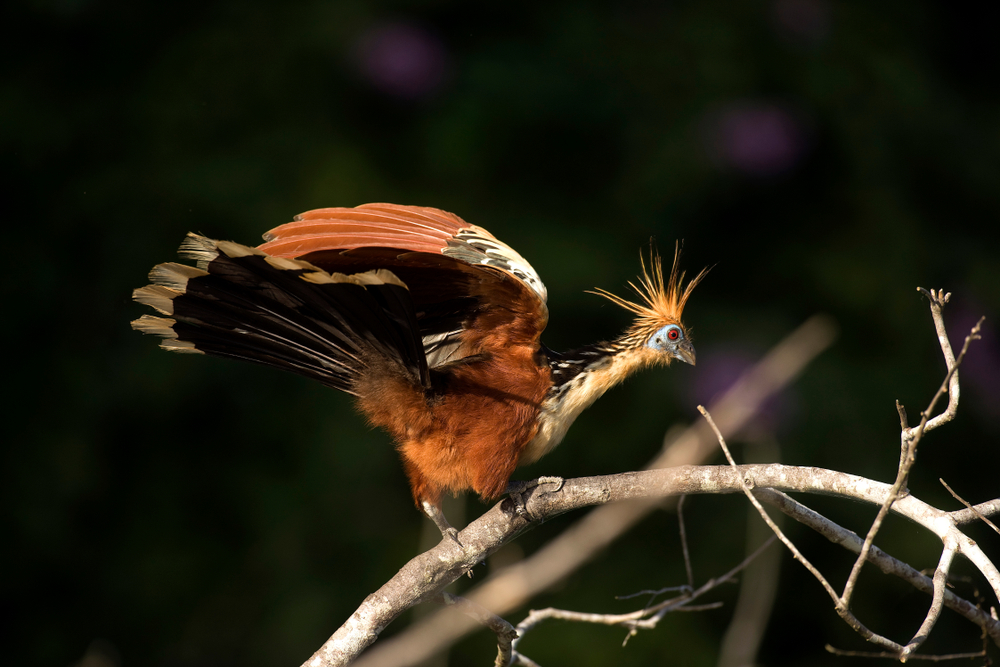
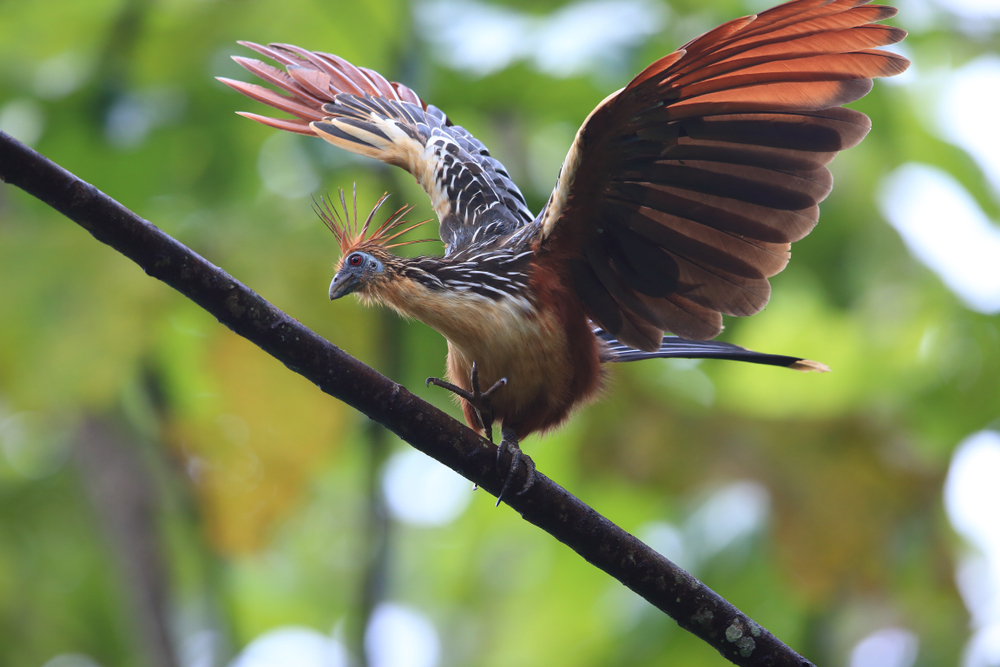
This bizarre bird has puzzled scientists for decades. With its blue face, red eyes, and punk-rock crest of feathers, the hoatzin looks like nature’s rebel. But its weirdness goes far beyond appearances.
The hoatzin appears to be an evolutionary orphan, making it difficult for researchers to figure out where it fits on the bird family tree. Its unique digestive system, prehistoric features, and unusual lifestyle have earned it the nickname “living fossil,” offering a glimpse into what ancient birds might have been like millions of years ago.
Unique Anatomy and Characteristics
The hoatzin possesses several distinctive physical features that set it apart from virtually every other bird species. Its chicks sport functional claws on their wings, while adults display a punk-rock crest and emit a distinctive barnyard odor that has earned them an unfortunate nickname.
Clawed Wings: A Prehistoric Trait in Modern Birds
Hoatzin chicks are born with two functional claws protruding from the leading edge of each wing. These emerge from the bird’s first and second fingers, positioned exactly where Archaeopteryx and other primitive birds had similar structures.
The wing claws are fully functional anatomical structures with their own musculature, nerves, and blood supply. Each claw is covered with a keratin sheath that maintains a sharp point for gripping branches during climbing activities.
Young hoatzins use these claws to navigate through tree canopies with remarkable dexterity. When threatened by predators, chicks drop from their nests into the water below, then use their wing claws to climb back up to safety once danger passes.
The claws gradually diminish as the birds mature over their first 8-10 weeks of life. By adulthood, the claws become hidden beneath fully developed wing feathers and are no longer visible or functional.
Striking Appearance: Crests, Color, and Features
The hoatzin is roughly chicken-sized with a spiky crest that gives it a perpetually disheveled appearance. Its face displays bright blue skin that contrasts sharply with its reddish-brown plumage, creating an unmistakable profile in the Amazon canopy.
The bird’s eyes are red, adding to its prehistoric aesthetic. Its overall build appears somewhat ungainly compared to most other birds, with a relatively large body supported by wings that seem slightly undersized for its frame.
The hoatzin’s sternum lacks the prominent keel found in most flying birds. This unusual skeletal feature gives it more in common with primitive avian ancestors than with modern species, contributing to its reputation as a living link to the past.
Stinkbird: The Source and Role of Its Odor
The hoatzin has earned the unflattering nickname “stinkbird” due to its distinctive manure-like smell. This odor comes directly from its unique digestive system, which ferments vegetation similar to how cows process plant matter.
The bird possesses an enlarged crop where bacterial fermentation breaks down the tough leaves that make up its diet. This fermentation process produces compounds that give the hoatzin its characteristic barnyard scent, which can be detected from a considerable distance.
The smell serves no known defensive purpose but is simply a byproduct of the bird’s specialized digestive anatomy. Local names for the species, including canje pheasant in some regions, sometimes reference this pungent characteristic that makes the hoatzin immediately identifiable even before it’s seen.
A Closer Look at the Digestive System
The hoatzin processes plant matter through a fermentation system located in an enlarged crop rather than a traditional gizzard. This bacterial breakdown of tough leaves produces the distinctive odor that earned the species its unflattering nickname.
Foregut Fermentation and Chambered Crop
The hoatzin stands apart from other birds by digesting food in a specialized foregut rather than relying on a gizzard. Its crop has evolved into a large, muscular chamber that takes up a significant portion of the bird’s body cavity. This enlarged organ can account for nearly a third of the bird’s total body weight when full.
Inside this chambered structure, beneficial bacteria break down cellulose from leaves and buds. The fermentation process generates heat and chemical byproducts similar to what happens in mammalian herbivores. The crop’s thick walls contain multiple compartments that allow plant material to move through different stages of bacterial digestion.
Because of this bulky digestive apparatus, the hoatzin has developed a large callus on its breastbone. This rubbery pad acts as a support structure when the bird perches, preventing it from toppling forward when its crop is distended with fermenting vegetation.
Cow-Like Digestion Among Birds
The hoatzin is the only bird with a digestive system that ferments vegetation like a cow does. While ruminants use a four-chambered stomach, the hoatzin achieves similar results with its modified crop. Both systems rely on symbiotic bacteria to extract nutrients from plant cellulose that would otherwise be indigestible.
This fermentation produces volatile fatty acids and gases as byproducts. The smell resembles cattle manure because the chemical compounds generated during bacterial breakdown are nearly identical. The unique foregut fermentation system allows the bird to survive on leaves and buds exclusively, though it comes at a cost—the heavy, gas-filled crop makes flight laborious and awkward.
Diet and Lifestyle in the Wild
The hoatzin survives on a highly specialized leaf-based diet in swampy habitats across South America, where it lives in social groups and has adapted unique feeding strategies that set it apart from nearly all other birds in nature.
Leaf-Based Diet and Feeding Habits
The hoatzin is a folivore, meaning it feeds primarily on leaves rather than seeds, insects, or typical bird foods. Research in Venezuela found that the hoatzin’s diet consists of 82% leaves, with flowers making up 10% and fruit only 8% of its consumption.
This bird eats leaves from more than 50 different plant species found in its marshy habitat. It clambers along branches searching for young leaves and buds, which are easier to digest than mature foliage. The hoatzin uses serrations on its beak to cut leaves into smaller pieces before swallowing them whole.
The bird has developed a leathery bump on the bottom of its crop that helps it balance on branches while feeding. Any insects or animal matter consumed are purely accidental rather than intentional prey. The fermentation process that digests these leaves takes considerable time, making the hoatzin a slow-moving bird that spends much of its day resting to conserve energy.
Social Behavior and Range
Hoatzins inhabit swamps, riparian forests, and mangroves throughout the Amazon and Orinoco Basins in South America. These animals are noisy and social, living in colonies near water where they make various hoarse calls including groans, croaks, hisses, and grunts.
The species is known locally as the Canje pheasant in Guyana, where it serves as the national bird. Hoatzins are generally poor fliers due to their heavy digestive system, so they stick close to water and dense vegetation. They prefer to climb and hop between branches rather than fly long distances.
When threatened, adults in a colony work together to protect their young by flying noisily around predators to create a distraction. The birds are rarely hunted for food except in times of extreme need due to their unpleasant odor.
Evolutionary History and Family Tree Mystery
The hoatzin’s placement in the avian family tree has puzzled scientists for decades, with genetic studies placing it in a taxonomic order all by itself. This bird doesn’t fit neatly anywhere, leading researchers to propose connections to everything from chickens to cuckoos without reaching consensus.
Where Does the Hoatzin Fit in Avian Evolution?
The hoatzin belongs to its own order called Opisthocomiformes, making it taxonomically isolated from other birds. Scientists have shuffled it around the avian family tree like an orphan with no clear relatives.
Molecular studies keep repositioning this bird because it shares characteristics with multiple groups but doesn’t match any single lineage closely. The young hoatzin’s wing claws have led some researchers to connect it with Archaeopteryx from the dinosaur era. These claws appear functional and help chicks climb through vegetation, representing a trait rarely seen in modern birds.
The species exists as the only member of its genus Opisthocomus and the only living representative of its entire family. This isolation makes determining its evolutionary relationships particularly challenging for ornithologists.
Competing Theories on Its Ancient Origins
Various avian groups have been proposed as close relatives over the past half-century, including galliforms like chickens and turkeys, cuckoos, pigeons, tinamous, and numerous other bird orders. None of these theories have gained widespread acceptance among researchers.
Some scientists focus on the hoatzin’s unique digestive system that ferments vegetation like a cow, which sets it apart from nearly all other birds. Others point to physical features like the chick’s clawed wings as evidence of primitive characteristics. The bird’s combination of traits doesn’t match expected patterns of avian evolution, making it difficult to trace its lineage back through time.
Studies Suggesting Evolutionary Orphan Status
The hoatzin appears to be an evolutionary orphan based on genetic analysis that shows no close living relatives. Its family tree stands remarkably alone among modern birds.
The hoatzin carries visible evidence of its dinosaur heritage through features like the functional wing claws found in chicks. This has led some to view it as a living fossil preserving ancient traits. Morphological and genetic studies conducted over decades haven’t resolved where this species branched off from other bird lineages, leaving its position in avian evolution as one of ornithology’s enduring mysteries.
Relatives, Rivals, and Prehistoric Connections
The hoatzin’s evolutionary lineage has puzzled scientists for decades, with its strange anatomy suggesting links to multiple ancient groups. Researchers have found surprising parallels between this odd bird and creatures from millions of years ago, from dinosaurs to reptiles and even some mammals.
Comparisons With Dinosaurs and Early Birds
The hoatzin chick’s wing claws immediately draw comparisons to Archaeopteryx, one of the earliest known birds from the Jurassic period. These claws help young hoatzins climb through branches when they fall into water or need to escape predators. The chicks use them to scramble back up to their nests, a behavior that mirrors what scientists believe juvenile Archaeopteryx might have done.
The skeletal structure of the hoatzin also shares features with some theropod dinosaurs. Its enlarged crop and modified sternum create a body plan unlike any other living bird. Some paleontologists have noted that the hoatzin’s digestive system, which ferments plant material in a specialized foregut, represents a unique evolutionary path among modern birds.
These primitive characteristics have led some researchers to call the hoatzin a “living fossil,” though this term remains debated. The bird’s clawed wings disappear as it matures, unlike Archaeopteryx which retained them into adulthood.
Possible Connections to Crocodiles and Mammals
The hoatzin’s fermentation-based digestion system resembles that of ruminant mammals like cows more than it does other birds. Both animals break down tough plant material through bacterial fermentation, though the hoatzin does this in its crop rather than a multi-chambered stomach. This convergent evolution explains why the bird produces its signature manure-like smell.
Interestingly, genetic studies have revealed unexpected relationships in the hoatzin’s ancestry. Some research suggests distant connections to shore birds and cuckoos, though its exact placement on the avian family tree remains uncertain. The bird’s unique traits make it difficult to classify using traditional methods.
The hoatzin’s semi-aquatic lifestyle and the way chicks drop into water to escape danger shows behavioral parallels with crocodilians, though these are environmental adaptations rather than direct evolutionary links.
Conservation Status and the Hoatzin’s Place in Nature
The hoatzin currently holds a stable position in the wild, though habitat destruction and hunting present growing challenges. Understanding these threats and the bird’s ecological importance helps explain why scientists are working to protect this unusual species.
Conservation Efforts and Environmental Threats
Hoatzins are frequently hunted throughout South America, and habitat destruction poses an increasing threat to their populations. The birds depend on riverine forests and wetlands in the Amazon and Orinoco basins, ecosystems that face pressure from deforestation and development.
Despite these challenges, the species isn’t currently considered endangered. The hoatzin’s strong-smelling nature and unpalatable meat due to its specialized diet actually provide some protection from hunting pressure. However, the ongoing destruction of their wetland habitats remains a concern for long-term survival.
The species is highly social and often forms flocks of up to 100 individuals during the dry season. This behavior helps them thrive in suitable habitats, but it also means they’re vulnerable when those specific environments disappear.
Why Preserving Hoatzins Matters
The hoatzin represents a unique branch of avian evolution that offers scientists valuable insights into bird development and digestive adaptations. Its specialized fermentation-based digestive system is unlike any other bird species, making it an important subject for evolutionary research.
Opisthocomus hoazin stands as one of ornithology’s most fascinating enigmas, bridging ancient prehistory with modern avian life. The chicks’ functional wing claws provide scientists with a tangible connection to understanding how birds evolved from their dinosaur ancestors.
Beyond scientific value, hoatzins serve as indicators of healthy wetland ecosystems. Their presence signals intact riverine forests with the specific vegetation they need to survive. Protecting these birds means preserving the broader wetland habitats that support countless other species throughout South America’s river basins.