The Naked Mole Rat Lives 30+ Years, Feels No Pain, and Almost Never Gets Cancer — Researchers Are Studying Its Cells for Human Longevity Clues
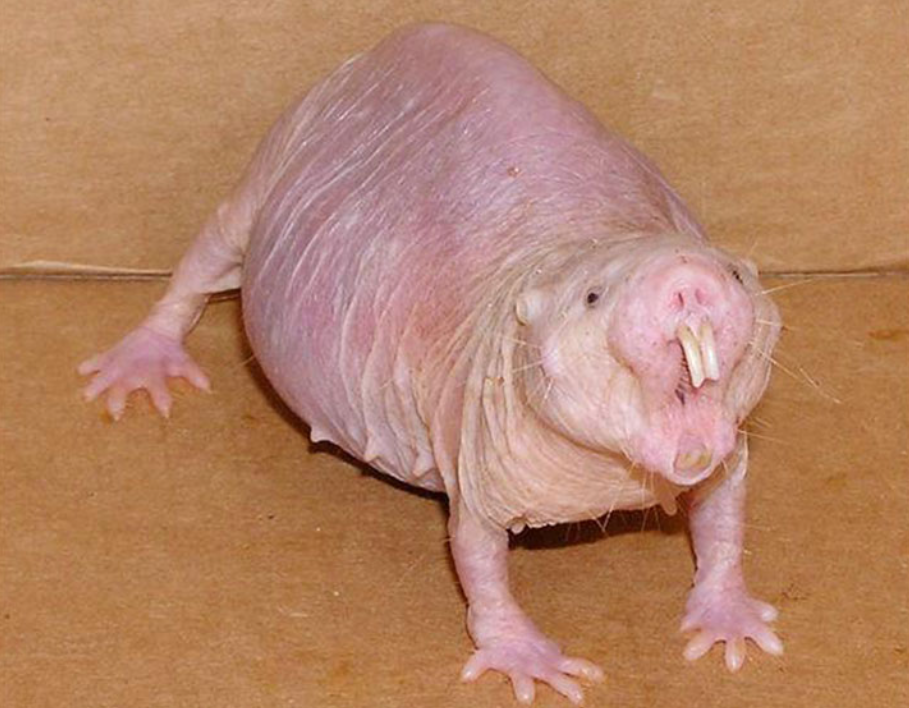
The naked mole-rat might be one of the ugliest creatures on Earth, but it’s also one of the most remarkable. These wrinkly, buck-toothed rodents can live more than 30 years in captivity, resist cancer with near-perfect success, and appear immune to certain types of pain. Recent research has revealed that four subtle genetic tweaks to a single enzyme may explain why naked mole rats live for nearly 30 years, an unusually long lifespan for creatures their size.

Image Credit: Kein keen – CC BY-SA 4.0 / Wiki CommonsWhile a typical lab mouse barely makes it to three years, Heterocephalus glaber can outlive them by a factor of ten. Scientists have been fascinated by these burrowing mammals for decades, trying to unlock the secrets hidden in their cells. The animals show remarkable resistance to age-related diseases that plague humans, including cancer, neurological deterioration, and arthritis.
Researchers are now diving deep into the mole rat’s DNA, studying everything from its cellular repair mechanisms to the specific mutations that might hold clues for extending human health span. The discoveries emerging from these studies could reshape how we think about aging, disease resistance, and what’s biologically possible for our own species.
What Makes Naked Mole-Rats So Unusual?
These wrinkly rodents break nearly every rule of mammalian biology. They live decades longer than similar-sized animals, feel almost no pain, and organize their colonies like bees or ants.
Extreme Longevity in a Tiny Package
Naked mole rats can live for nearly 30 years, which is absolutely wild for a rodent their size. Most mice and rats only make it 2-4 years before dying of old age.
These creatures also defy something called the Gompertz law. This mathematical equation says that as animals age, their risk of death should increase exponentially. But naked mole rats don’t follow this pattern at all.
Even more impressive, they resist diseases that typically come with aging. Scientists have observed that naked mole rats appear protected from cancer, arthritis, cardiovascular disease, and neurodegeneration as they grow older. Research into their longevity has revealed that four subtle tweaks to a specific enzyme might explain their extended lifespan.
Their resistance to cancer is particularly noteworthy. The rodents produce a complex sugar that keeps cells from clumping together and forming tumors.
Pain Insensitivity and Social Life Underground
Naked mole-rats lack pain sensitivity in their skin, making them unique among mammals. They also have very low metabolic and respiratory rates.
These animals live in burrows throughout eastern Africa’s dry regions. Their underground tunnel systems can extend over 3 km and reach depths of 2 meters. The colonies they build function in low-oxygen environments that would be toxic to most other mammals.
The species Heterocephalus glaber weighs just 35-45 grams and lacks a fur coat. They regulate body temperature poorly compared to other mammals. Wild colonies can reach 300 individuals but typically comprise around 60-75 naked mole rats.
Eusocial Behavior and Survival Tactics
Naked mole rats are one of only two known eusocial mammals. The Damaraland mole-rat is the only other known eusocial mammal species.
In their colonies, only one female breeds while the majority of individuals spend their entire lives working for the group. This social structure mirrors insect hives more than typical mammal groups. The queen produces offspring while workers maintain tunnels, gather food, and defend the colony.
This unusual social organization helps them survive in harsh underground environments. Workers cooperate to dig extensive tunnel networks and share food resources. The division of labor allows the colony to thrive where individual animals might struggle to survive alone.
DNA Repair: The Mole Rat’s Cellular Superpower
The naked mole rat’s exceptional longevity hinges on a modified enzyme that reverses the typical function of DNA repair regulation, allowing these rodents to fix cellular damage far more effectively than other mammals. This molecular adaptation involves four specific amino acid changes in the cGAS protein that enhance rather than suppress critical repair pathways.
cGAS Protein’s Unique Role
In humans and mice, the cGAS enzyme normally acts as a brake on DNA repair by suppressing homologous recombination. This creates a problematic situation where the very protein meant to detect DNA damage actually prevents efficient fixing of that damage.
Naked mole rat cGAS works completely differently. The four amino acid substitutions flip the script entirely, transforming cGAS from a repair inhibitor into a repair enhancer. These changes allow the modified enzyme to stay attached to chromatin longer after DNA damage occurs.
The mechanism behind this extended retention involves altered ubiquitination patterns and weakened interaction with the segregase protein P97. By lingering on damaged chromatin, naked mole rat cGAS facilitates the formation of a complex between RAD50 and FANCI, two crucial repair factors that work together to recruit additional repair machinery to damage sites.
Homologous Recombination and Double-Strand Breaks
Double-strand breaks represent one of the most dangerous forms of DNA damage. When both strands of the DNA helix snap, cells face a critical challenge in accurately reconstructing the original genetic sequence.
Homologous recombination serves as the gold standard for repairing these breaks. This pathway uses an intact DNA strand as a template, essentially copying the correct sequence to fix the damaged section with high fidelity.
The naked mole rat’s modified cGAS protein specifically enhances this homologous recombination pathway. By promoting the interaction between FANCI and RAD50, the altered enzyme helps recruit repair factors to damage sites more efficiently. FANCI, typically associated with the Fanconi anemia pathway, gains a new role in supporting RAD50’s recruitment to chromatin in these long-lived rodents.
Repair Efficiency and Genome Stability
The consequences of enhanced DNA repair extend throughout the naked mole rat’s biology. Cells with superior repair capabilities accumulate fewer mutations over time, maintaining genomic stability that typically degrades with age.
Tests comparing naked mole rat cells to human and mouse cells revealed dramatic differences in repair performance. The modified cGAS protein attenuated stress-induced cellular senescence and mitigated organ degeneration in experimental models. When researchers introduced naked mole rat cGAS into fruit flies, the insects experienced extended lifespans.
Even more striking, aged mice treated with the naked mole rat version of the enzyme showed reduced frailty, less hair graying, and decreased markers of cellular senescence across multiple tissues. The four amino acid changes proved essential—reverting them eliminated all protective effects.
The Biological Lego Analogy
Think of DNA repair like rebuilding a complex Lego structure after part of it breaks. Standard repair methods might simply glue pieces together wherever they fall, creating a messy approximation of the original design.
Homologous recombination works more like having the instruction manual handy. The cell references an intact copy of the genetic instructions to rebuild the damaged section precisely, block by block. The naked mole rat’s modified cGAS acts like an expert builder who stays at the worksite longer, ensures the right instruction pages get opened, and calls in additional skilled workers to complete the reconstruction correctly.
Human cGAS essentially tells the builder to leave the job site early, resulting in more errors and incomplete fixes. The naked mole rat’s evolutionary adjustment keeps the repair machinery engaged until the job gets done right, preserving the genetic instruction manual’s accuracy decade after decade.
How Naked Mole-Rats Resist Aging and Disease
Naked mole-rats have evolved distinct molecular mechanisms that protect their cells from damage and dysfunction. These rodents maintain genomic stability through enhanced DNA repair systems and produce specialized proteins that prevent cellular deterioration.
Cellular Senescence Prevention
The naked mole-rat’s resistance to cellular senescence involves a modified version of the cGAS protein that functions differently than in other mammals. Research published in 2026 revealed that four specific amino acid changes in naked mole-rat cGAS enable it to enhance DNA repair rather than suppress it.
This altered cGAS protein stays on chromatin longer after DNA damage occurs. It facilitates a complex between RAD50 and FANCI repair factors, strengthening the homologous recombination pathway that fixes double-strand breaks.
Key protective effects include:
- Reduced stress-induced cellular senescence
- Lower levels of senescence markers in tissues
- Decreased immunoglobulin G and interleukin-6 in circulation
- Mitigation of organ degeneration
When researchers delivered this modified cGAS to aged mice, the animals showed reduced frailty and less hair graying. The four amino acids proved essential for these benefits.
Cancer Resistance Mechanisms
Naked mole-rats can live over 40 years while almost never developing cancer, an extraordinary feat for a rodent. Their cells possess multiple safeguards against malignant transformation.
The enhanced DNA repair system plays a central role in cancer prevention. By maintaining genomic stability more effectively than mice or humans, these animals avoid the mutations that typically lead to tumor formation. Their modified cGAS protein actively prevents the chromosomal instability that drives cancer development.
Researchers studying cancer resistance note that naked mole-rats evolved these cytoprotective mechanisms over 31 million years in harsh underground conditions. The same adaptations that help them survive extreme environments also protect against malignancy.
Comparisons With Other Rodents
A typical lab mouse lives 3-4 years and frequently develops tumors. Naked mole-rats outlive them by a factor of ten.
These animals avoid many age-related conditions that affect other mammals, including neurodegeneration, cardiovascular disease, and arthritis. Their maximum lifespan reaches approximately 37-41 years depending on the source.
The difference lies in fundamental cellular processes. While mouse cGAS suppresses DNA repair and promotes genomic instability, the naked mole-rat version does the opposite. This single protein modification contributes significantly to their extended healthspan and resistance to age-related diseases.
Genetic Tweaks: Four Mutations With Huge Impacts
The naked mole rat’s extraordinary longevity stems from four specific amino acid changes in the cGAS protein that fundamentally alter how these animals repair DNA damage. These mutations essentially flip a genetic switch, transforming a process that typically suppresses DNA repair into one that enhances it.
Amino Acid Changes in cGAS
The cGAS protein normally acts as a DNA sensor that initiates immune responses when it detects genetic material in the wrong cellular compartments. In humans and mice, this protein actually inhibits homologous recombination, a crucial pathway for fixing double-strand breaks in DNA.
Naked mole rat cGAS works differently because of four specific amino acid substitutions in its structure. These changes occur in the C-terminal domain of the protein, the region responsible for how cGAS interacts with other cellular machinery.
The altered amino acids enable the protein to stay attached to chromatin longer after DNA damage occurs. This happens because the mutations weaken something called TRIM41-mediated ubiquitination and change how cGAS interacts with a segregase protein called P97. The extended presence on chromatin allows cGAS to facilitate interactions between RAD50 and FANCI, two repair factors that don’t normally work together as closely.
Gene Transfer Experiments in Mice and Flies
Researchers tested whether these genetic changes could work in other species by introducing naked mole rat cGAS into different animals. When they delivered the modified cGAS to aged mice using adeno-associated virus vectors, the results were striking.
The treated mice showed reduced frailty and less hair graying, along with lower levels of inflammatory markers like interleukin-6 and immunoglobulin G in their blood. Multiple tissues displayed fewer cellular senescence markers, suggesting the enhanced DNA repair was working throughout their bodies.
In fruit flies, naked mole rat cGAS extended lifespan and reduced stress-induced cellular senescence. It also mitigated organ degeneration as the flies aged.
The researchers then did something clever: they reverted the four amino acids back to their original form. When they did this, all the protective effects disappeared completely. This confirmed that those specific mutations were directly responsible for the benefits, not some other factor.
Evolutionary Rewiring of Repair Pathways
Evolution typically optimizes proteins by enhancing their beneficial functions. The naked mole rat took a different approach by weakening a negative regulator instead.
Human and mouse cGAS suppress homologous recombination, which leads to genomic instability over time. This suppression accelerates aging by allowing DNA damage to accumulate. The evolutionary changes in naked mole rat cGAS reversed this function entirely.
The prolonged chromatin binding enables cGAS to create a bridge between FANCI (primarily associated with the Fanconi anemia pathway) and RAD50 (a canonical homologous recombination factor). FANCI helps recruit RAD50 to sites of DNA damage, which potentiates the repair of double-strand breaks through homologous recombination.
This represents a fundamental rewiring of cellular defense mechanisms. Rather than having cGAS focus solely on immune surveillance, the naked mole rat evolved a dual-purpose protein that simultaneously watches for threats and actively strengthens genome stability.
The Scientists Behind the Discoveries
Research teams across multiple institutions have uncovered the biological mechanisms that allow naked mole rats to live exceptionally long lives. The work spans universities in the United States, United Kingdom, and China, with breakthrough studies published in leading scientific journals.
Gabriel Balmus and the University of Cambridge Team
Gabriel Balmus led a research team at the University of Cambridge that identified crucial genetic differences in how naked mole rats repair DNA damage. Their work focused on a protein called cGAS, which typically interferes with DNA repair in humans and mice but works differently in naked mole rats.
The Cambridge team discovered that four subtle tweaks to an enzyme could help explain why these rodents live nearly 30 years. In naked mole rats, the modified cGAS protein actually helps cells repair DNA damage more effectively instead of hindering the process. This improved genome stability appears to delay aging signs in experimental models.
The findings were published in Science and represented a major shift in understanding how the same protein can have opposite effects across different species.
Major Studies and Collaborations
Scientists at the University of Rochester made headlines by successfully transferring a naked mole rat longevity gene into mice. Vera Gorbunova and Andrei Seluanov led this groundbreaking work, which focused on high molecular weight hyaluronic acid (HMW-HA).
The 2023 study in Nature showed that mice carrying the naked mole rat version of the hyaluronan synthase 2 gene lived 4.4 percent longer and showed better protection against cancer. The modified mice also had less inflammation and maintained healthier guts as they aged.
Chinese research teams have also contributed significant discoveries about DNA repair mechanisms. Their work with fruit flies demonstrated that naked mole rat longevity mechanisms could transfer across species.
What’s Next for Mole Rat Research?
Researchers are now working to translate these findings into human applications. The Rochester team has identified molecules that slow down hyaluronan breakdown and are testing them in pre-clinical trials.
Seluanov believes this is just the beginning of adapting longevity traits from long-lived species to benefit human health. Scientists are exploring two main approaches: slowing the breakdown of beneficial molecules like HMW-HA or increasing their production in the body.
The teams are also investigating whether combining multiple naked mole rat mechanisms—such as improved DNA repair, enhanced HMW-HA production, and modified immune responses—could produce greater anti-aging effects than any single intervention alone.
What Naked Mole-Rat Science Means for Human Longevity
The recent breakthrough in transferring a longevity gene from naked mole rats to mice demonstrates that these rodents’ anti-aging mechanisms can work across species. Scientists have identified specific genetic modifications that enhance DNA repair and reduce cellular damage, opening new pathways for human therapies.
Potential for Anti-Aging Therapies
Researchers discovered that naked mole-rat cGAS protein contains four altered amino acids that dramatically improve DNA repair through homologous recombination. This mechanism helps stabilize the genome and prevent age-related damage that typically accumulates in cells.
When scientists delivered this modified cGAS protein to aged mice using adeno-associated virus therapy, the results were striking. The mice showed reduced frailty, less hair graying, and decreased markers of cellular senescence across multiple tissues. Their immune systems also improved, with lower levels of inflammatory markers.
The gene transfer experiments proved these benefits depend entirely on those four specific amino acid changes. Reverting them eliminated the protective effects, confirming that this precise modification drives the longevity advantages.
These findings suggest that targeted gene therapies could enhance human DNA repair efficiency. The approach doesn’t require creating entirely new biological systems—just optimizing proteins humans already possess.
Challenges and Hopes for the Future
Moving from mice to humans presents significant hurdles. Gene therapy delivery systems need refinement to safely reach all necessary tissues in larger organisms. Regulatory approval requires extensive safety testing to ensure the modifications don’t trigger unexpected side effects.
The naked mole rat’s resistance to cancer and age-related diseases likely involves multiple biological mechanisms beyond just improved DNA repair. Scientists must determine whether enhancing homologous recombination alone provides substantial benefits or if complementary therapies are needed.
Timing also matters—researchers don’t yet know whether these interventions work best when administered early in life or if they can reverse existing aging damage. Clinical trials will need to address optimal dosing, treatment schedules, and which patient populations benefit most.
Despite these obstacles, the research provides concrete molecular targets rather than vague theories about aging.