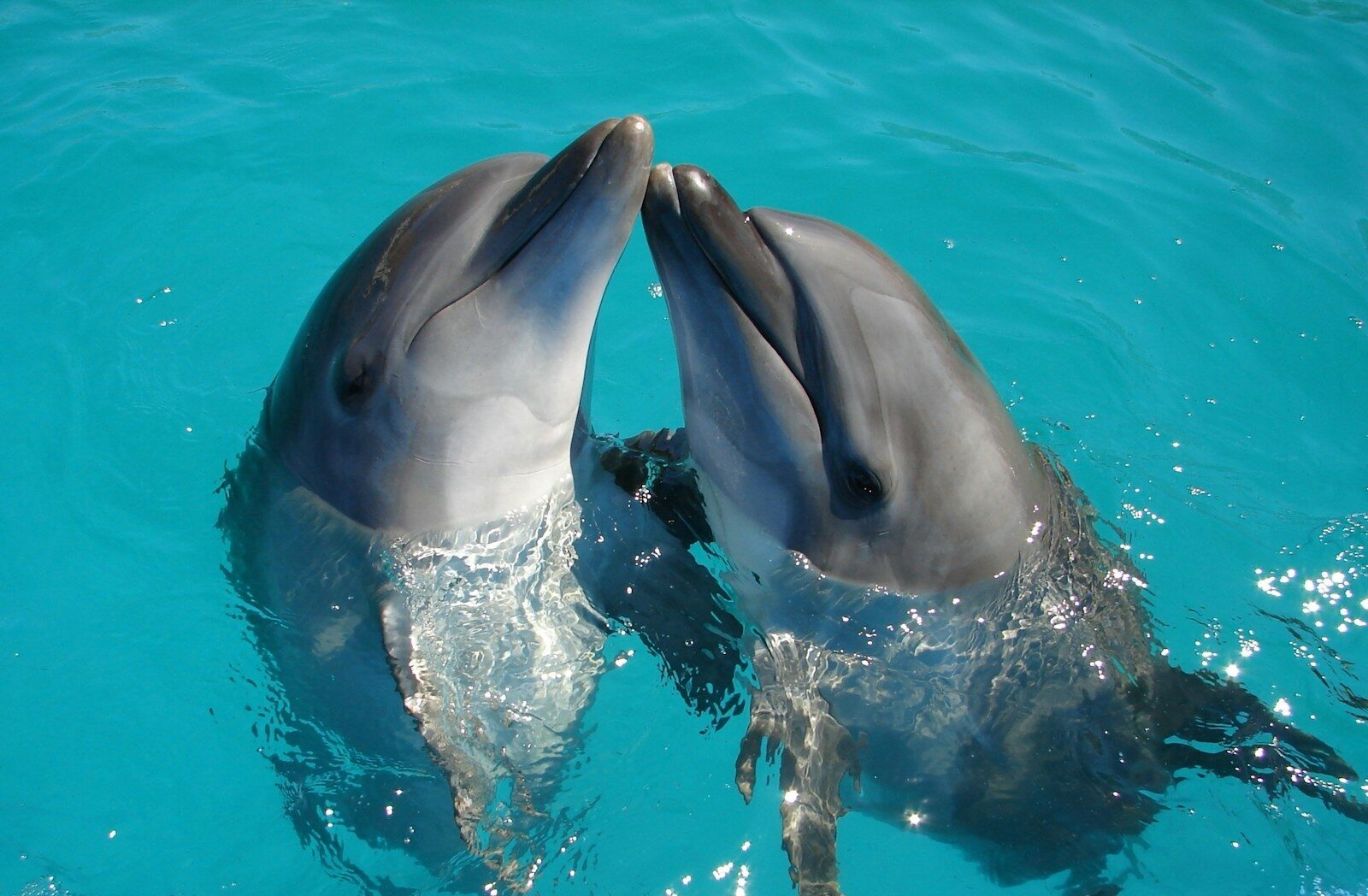
Dolphins Call Each Other by Unique Signature Whistles That Function Like Names — They Even Respond When They Hear Their Own Whistle Played Back
Dolphins possess a remarkable ability that sets them apart in the animal kingdom. Each dolphin develops a unique signature whistle that functions like a personal name, and they respond when they hear their own whistle played back to them. This sophisticated form of communication has fascinated scientists since the 1960s, when researchers first noticed these marine mammals using distinct vocalizations to identify themselves.
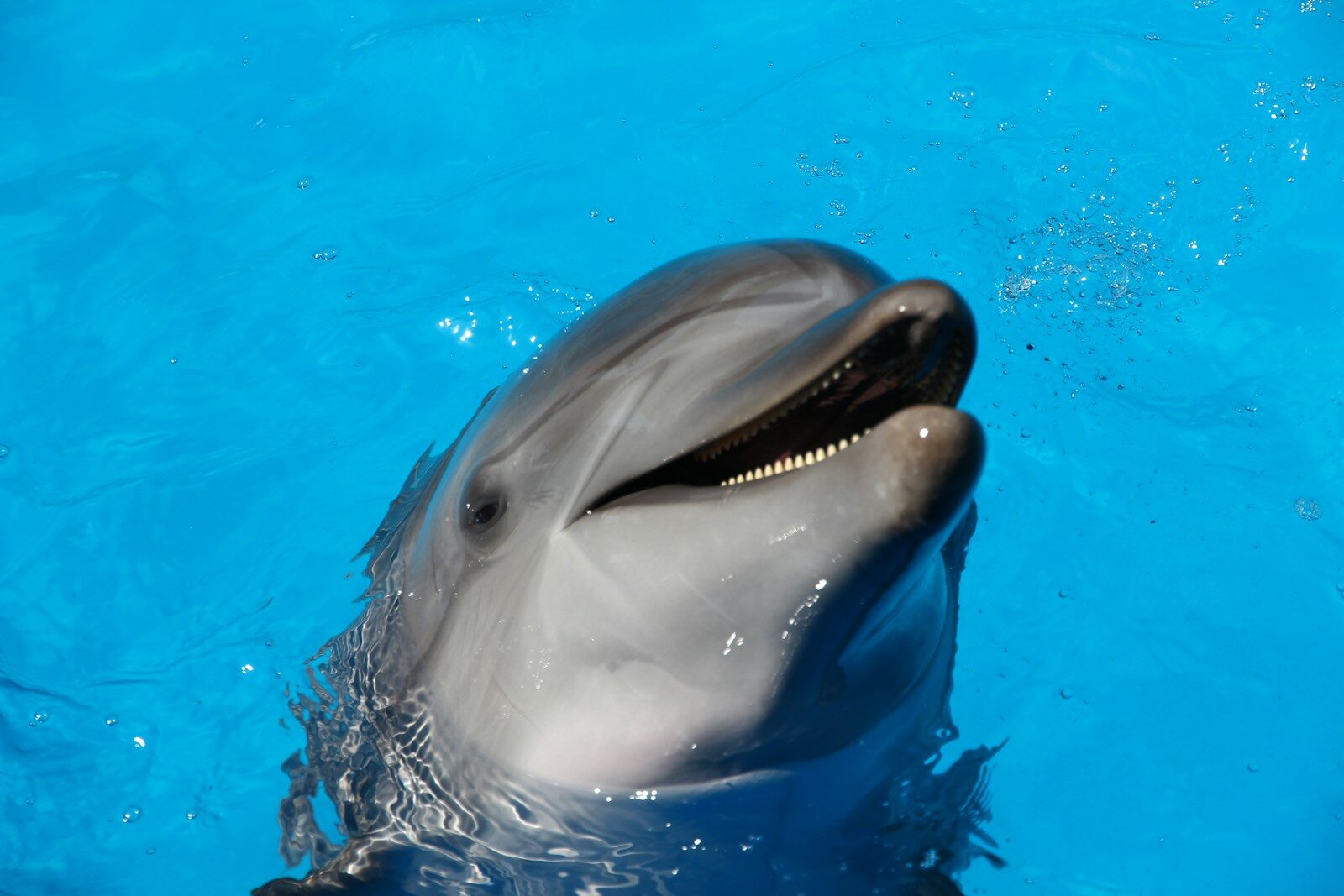
The ocean’s murky waters and noisy environment make visual identification challenging, so dolphins evolved an acoustic solution. These signature whistles work much like human names, allowing pod members to call out to specific individuals across distances. When scientists play a recording of a dolphin’s unique whistle, that particular dolphin often responds by repeating its own signature sound back, as if acknowledging “Yes, that’s me.”
Understanding how dolphins develop these whistles, recognize each other, and maintain complex social relationships through sound reveals cognitive abilities that rival some aspects of human language. The research spans decades of observation, from studies of captive dolphins to wild populations swimming off the coast of Scotland, and continues to uncover new insights about how dolphins hold mental representations of other dolphins in their minds.
How Dolphins Develop and Use Signature Whistles
Bottlenose dolphins create their unique acoustic identifiers during infancy through a learning process influenced by their mothers and social groups, maintaining these distinct whistles throughout their lives with remarkable consistency. Research spanning nearly 50 years has revealed how these marine mammals develop, refine, and deploy their signature whistles in complex social situations.
The Discovery of Individualized Whistles
Scientists first identified dolphin signature whistles almost 50 years ago, opening a new understanding of marine mammal communication. These high-pitched, warbly sounds function differently from most animal vocalizations because they’re learned rather than inherited.
Unlike monkeys that use inherited food calls or predator warnings, bottlenose dolphins develop their whistles through vocal learning. Each dolphin produces a whistle with a unique frequency curve that dominates in its vocal repertoire.
Signature whistles are in a higher frequency range than humans can hear, making specialized recording equipment necessary for research. The discovery showed that dolphins possess one of the most complex forms of animal communication, with each individual maintaining its own distinct acoustic signature that other pod members recognize and remember.
The Process of Signature Whistle Formation in Calves
Infant dolphins learn their individual whistles from their mothers during their first year of life. Each dolphin develops its unique whistle primarily during this critical period, creating an acoustic identity they’ll use throughout their entire existence.
The development process involves vocal production learning, where calves experiment with different sounds before settling on their personal whistle. Young dolphins appear to avoid copying their mother’s exact whistle, instead creating variations that distinguish them as separate individuals within the pod.
This learning period establishes the foundation for lifelong social bonds and communication. Mother-and-calf pairs use these whistles to maintain contact, especially when separated in murky water or complex social situations.
Stability and Adaptation of Whistles Over a Dolphin’s Life
Dolphin signature whistles remain remarkably stable across decades. Researchers recorded one pair of male dolphins twice over 12 years and found that each dolphin still copied the fine details of the other’s whistle, demonstrating the persistence of these acoustic bonds.
Dolphins use their signature whistle at a high rate in the wild, making it one of the most common sounds they produce. They sometimes give 5.3 calls per minute when separated from their social partners.
While the core whistle remains consistent, dolphins can add parts of their own signature to copies of others’ whistles. This suggests they may include additional information beyond simple identification, potentially conveying emotional states or specific messages to their companions.
The Role of Signature Whistles in Dolphin Communication
Signature whistles serve as the foundation of dolphin vocalizations, allowing these marine mammals to identify specific individuals, coordinate group activities, and maintain relationships across distances. Dolphins actively copy each other’s whistles to call out to specific companions, much like humans use names to get someone’s attention.
Addressing Individuals and Group Coordination
Bottlenose dolphins developed a sophisticated system where each individual has its own unique whistle that functions as an acoustic label. These dolphin signature whistles are individually distinctive and encode identity information, making them the most frequently emitted whistle type among dolphin pods.
When dolphins need to coordinate activities or locate specific group members, they use these personalized calls to address individuals directly. This ability to reference specific dolphins allows for complex social interactions that go beyond simple broadcasts to the entire group.
Researchers studying dolphin communication have found that these labels play an essential role in creating and keeping relationships among dolphins. The whistles enable dolphins to maintain individual identities within their dynamic social groups, which constantly shift and change.
Vocal Mimicry and Whistle Copying
Dolphins possess remarkable vocal mimicry abilities, allowing them to copy even quirky computer-generated sounds with precision. When it comes to how dolphins communicate with each other, they don’t just broadcast their own signature whistles—they actively imitate the whistles of their companions.
Research analyzing recordings from over 250 wild bottlenose dolphins revealed that dolphins copy the signature whistles of their closest social partners. They reproduce these copies quickly, typically within 1 second of hearing the original whistle. However, dolphins are highly selective about whose whistles they copy.
The copying behavior appears exclusively between allied males and mother-calf pairs. In one remarkable case, researchers recorded a pair of males twice over a 12-year period, and each dolphin still copied the fine details of the other’s whistle, demonstrating the long-lasting nature of these vocal bonds.
Maintaining Social Bonds and Reuniting Individuals
Dolphins produce copied whistles primarily when separated from their social partners, which researchers interpret as attempts to reunite with specific individuals. When dolphin pods get separated, members don’t call out their own names—they call the names of the companions they’re trying to find.
This behavior mirrors how humans call out a friend’s name when separated at a crowded location. The dolphins use these dolphin names to maintain contact and reestablish proximity with particular individuals they have close relationships with.
During studies where dolphins were briefly held in separate nets, they whistled at remarkably high rates—sometimes producing 5.3 calls per minute. The captured dolphins couldn’t see each other but could hear each other’s vocalizations, and they used this opportunity to maintain acoustic contact through their signature whistles.
Responding to Playback and Mutual Recognition
Dolphins demonstrate recognition of their own signature whistles when researchers play recordings back to them. This mutual recognition system allows dolphins to track who’s present in their environment and respond appropriately to calls directed specifically at them.
Scientists define a signature whistle as a whistle with a unique frequency curve that dominates in the repertoire of a dolphin. Each dolphin has a distinct signature whistle that other members of its social group use to individually identify the whistler, creating a two-way recognition system.
The dolphins sometimes add parts of their own signature whistle to copies of another dolphin’s call, suggesting they may be including additional information beyond simple identification. This layering of vocal elements hints at even more complex communication possibilities within dolphin vocalizations.
Cognitive Abilities Linked to Dolphin Naming
The use of signature whistles demonstrates sophisticated mental capabilities that scientists believe require advanced memory systems and the ability to form abstract concepts about other individuals. Research into how dolphins use signature whistles has revealed cognitive skills that parallel those found in great apes and humans.
Memory and Recognition Across Years
Dolphins don’t just remember their pod mates—they can recall the unique whistles of individuals they haven’t heard from in decades. Scientists have discovered that dolphins remember signature whistles for their entire lives, maintaining recognition of specific individuals across years of separation.
This long-term memory extends far beyond simple familiarity. Research suggests that dolphins may recognize and remember the signature whistles of dozens or even hundreds of other individuals throughout their lives. They store these acoustic signatures in ways that allow instant identification when they encounter former associates.
The retention of these vocal identities requires substantial neural resources dedicated to processing and storing acoustic information. This memory capability rivals the facial recognition systems humans use to identify people they’ve known throughout their lives.
Mental Representation of Individuals
The ability to use and respond to signature whistles indicates that dolphins form mental representations of other individuals as distinct entities. When a dolphin hears another’s whistle, it doesn’t just recognize a sound pattern—it associates that pattern with a specific individual and their characteristics.
This cognitive process involves abstract thinking beyond immediate sensory experience. Dolphins must link the acoustic signal to memories, social relationships, and past interactions with that particular individual. They develop these signals when young and maintain them throughout their lives, with up to 30% of their whistling potentially comprised of their signature whistle during social interactions.
The consistency of these whistles across contexts suggests dolphins understand them as stable identifiers rather than situation-dependent calls. This understanding demonstrates a concept of individual identity that extends across time and space.
Implications for Animal Cognition Research
The dolphin naming system has transformed scientific understanding of animal communication and intelligence. A recent study using statistical metrics to evaluate 21 different facets of sound—including length, frequency, pitch, and pattern—found that bottlenose dolphins’ identification sounds had the largest audio palette compared to other species, even surpassing larks.
These findings challenge traditional boundaries between human and animal communication. The dolphins’ ability to vary their whistles by repeating sections in loops, altering pitch, and adding or deleting short segments shows a level of vocal flexibility previously thought unique to humans and some bird species.
Scientists are now exploring whether signature whistles represent a form of referential communication—where sounds directly refer to specific things in the world. This research could reshape theories about the evolution of language and the cognitive prerequisites necessary for symbolic communication systems to develop.
Scientific Studies and Key Researchers in the Field
Research into dolphin signature whistles has advanced significantly through controlled experiments off the coast of Scotland and long-term observations in Florida. Scientists like Vincent Janik and Stephanie King have provided concrete evidence that these vocalizations function as individual identifiers in wild populations.
Vincent Janik’s Signature Whistle Research
Vincent Janik conducted groundbreaking work off the coast of eastern Scotland that demonstrated dolphins actively respond to their own signature whistles. His team recorded wild dolphins announcing themselves with their unique calls, then played these recordings back to the animals. Dolphins responded to their own whistles by repeating the same sound back, essentially confirming their presence.
The responses were selective and specific. Dolphins showed minimal reaction to whistles from familiar dolphins in their population and no response to unfamiliar dolphins from different groups. This research, published in the Proceedings of the National Academy of Sciences in July 2013, provided compelling evidence that these sounds function as names rather than just random vocalizations.
Janik’s work built on theories from the 1960s but took them further by proving dolphins don’t just make unique sounds—they actually listen for and respond to them in meaningful ways.
Stephanie King and the Sarasota Dolphin Research Program
Stephanie King’s research with the Sarasota Dolphin Research Program expanded understanding of how dolphins use signature whistles throughout their lives. Her studies revealed that dolphins remember these acoustic identifiers for years, even after prolonged separation from their pods. The work in Sarasota Bay, Florida, provided a natural laboratory where researchers could track individual dolphins over extended periods.
King’s team discovered that dolphins respond to playback of their own signature whistle even after years apart from familiar companions. This long-term memory suggests these vocalizations serve critical social functions in maintaining bonds within complex dolphin communities. The research also examined how dolphins develop their whistles early in life and refine them as they mature.
Role of the Proceedings of the Royal Society B
The Proceedings of the Royal Society B has published key findings about dolphin communication that have shaped current understanding of signature whistles. This peer-reviewed journal has featured research demonstrating that signature whistles may contain more information than just identity, potentially hiding additional details about the caller’s state or intentions.
Studies published in this journal have examined the acoustic structure and complexity of these calls. Researchers documented how the frequency modulation patterns in signature whistles differ from voice cues that affect all of a dolphin’s vocalizations. The journal has become a primary outlet for dolphin research that connects acoustic analysis with behavioral observations in wild populations.
Comparison to Other Animal Communication Systems
While many animals produce distinctive calls, dolphins stand out because their signature whistles carry identity information in the whistle’s structure itself rather than just voice characteristics. This puts dolphin communication in rare company alongside only a handful of other species that use learned vocal labels.
Differences from Other Mammals and Birds
Most mammals and birds rely on voice cues that affect all their calls, making individuals recognizable through tone or timbre. Dolphins do something fundamentally different—each develops a unique frequency modulation pattern that functions independently of voice characteristics.
Parrots represent one of the few exceptions in the bird world. Green-rumped parrotlets use contact calls for individual mate recognition, and orange-fronted parrots can address specific individuals through vocal imitation. Penguins also employ a two-voice system to recognize each other.
Among mammals, some bat species show vocal learning capabilities. Greater spear-nosed bats can learn social sounds, though their system differs from the complexity seen in dolphin vocalizations. Killer whales, close relatives of dolphins, use group-specific dialects but these function differently than individual signature whistles.
Are Signature Whistles a True Animal Language?
The question of whether signature whistles constitute actual language remains debated among researchers. These whistles carry identity information through their structure, and dolphins can copy each other’s whistles to get attention—suggesting referential communication.
However, dolphin communication lacks the grammatical complexity and abstract symbolism that defines human language. The whistles function more like vocal labels than words with multiple meanings.
Research shows dolphins understand sentence-level comprehension in artificial systems taught by humans, demonstrating strong animal cognition abilities. Their natural communication system, though sophisticated, operates within narrower boundaries than human language.
Vocal Labels and Social Complexity
The development of signature whistles appears linked to social needs. Bottlenose dolphins live in fission-fusion societies where group membership changes frequently, creating pressure for reliable individual identification methods.
Calves develop their signature whistles during their first year by modeling them on whistles of community members. This vocal production learning demonstrates cognitive flexibility rare in the animal kingdom.
The whistles serve primarily as cohesion calls that help maintain group contact, especially when visibility is limited underwater. Dolphins produce their signature whistles more frequently when isolated or separated from their group, reinforcing their function as social coordination tools.
Research Techniques and Future Directions
Scientists studying dolphin communication rely on sophisticated recording equipment and long-term observation programs to decode these complex vocalizations. The Sarasota Dolphin Research Program has been instrumental in capturing thousands of signature whistles from wild populations.
Field Recordings and Acoustic Analysis
Researchers face unique challenges when recording dolphin vocalizations underwater. The animals produce sounds in murky conditions where visibility is limited, making it tough to match specific calls to individual dolphins.
Scientists with the Sarasota Dolphin Research Program developed a clever workaround. They briefly captured pairs and groups of dolphins between 1984 and 2009, holding them separately in nets for an average of 108 minutes. The dolphins couldn’t see each other but could hear each other clearly, and they whistled at high rates during separation—sometimes producing 5.3 calls per minute.
Marine biologist Stephanie King analyzed acoustic recordings from over 250 wild bottlenose dolphins using this method. She created spectrograms, which are visual representations of sound waves, to compare whistle patterns. One researcher has analyzed approximately 15,000 whistles to better understand dolphin communication systems.
Playback Experiments and Long-Term Tracking
Playback experiments help scientists confirm that dolphins recognize specific whistles. Researchers record a dolphin’s signature whistle, then play it back to see how the animal responds.
These studies revealed that dolphins can recognize and remember the signature whistles of dozens, possibly hundreds, of other individuals throughout their lives. King’s team recorded one pair of males twice—once at the beginning of their study and again 12 years later. Even after more than a decade, each dolphin accurately copied the fine details of the other’s whistle.
The dolphins only imitated the calls of their closest social partners. Mothers and calves exchanged copies of each other’s whistles, as did allied males. They responded within 1 second of hearing their partner’s call.
Emerging Questions on Dolphin Social Intelligence
Scientists are now investigating whether dolphins can add information to their whistle copies beyond simple identification. Some dolphins add parts of their own signature whistle when copying a friend’s call, suggesting they may be including additional context.
Researchers want to know if dolphins can modify whistles to convey different meanings. Can they add sounds that indicate they need help during conflicts over mates? Can they express preferences about other individuals?
Recent work explores whether non-signature sounds function like words in dolphin communication. These questions could reveal whether dolphins gossip, negotiate, or share more complex information through their vocal exchanges.