The Hairy Frog Breaks Its Own Toe Bones to Push Out Cat-Like Claws When Threatened — Locals in Cameroon Call It the Horror Frog for a Reason
The hairy frog lives in the forests of Central Africa and has earned itself some unsettling nicknames. Locals in Cameroon call it the horror frog, while others refer to it as the wolverine frog. These names aren’t just dramatic labels—they’re based on one of nature’s most unusual defense mechanisms.
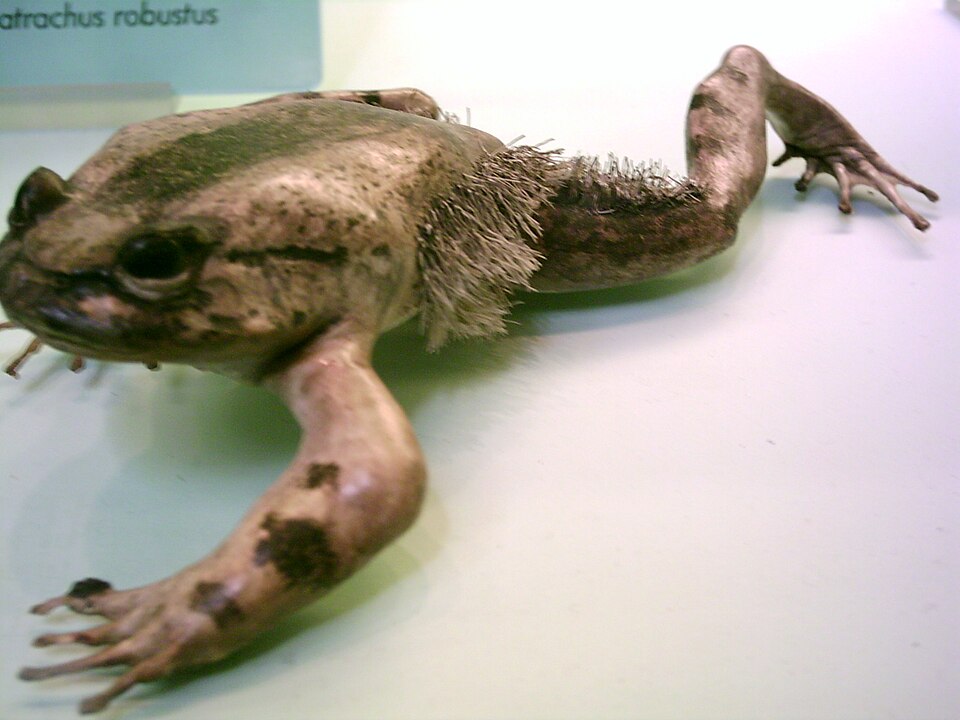
When threatened, the hairy frog deliberately breaks its own toe bones and forces them through its skin to create sharp, cat-like claws. The hairy frog actively breaks bone nodules in its toe tips and pushes the sharpened edges out as weapons. This self-mutilating behavior sets it apart from nearly every other amphibian on the planet.
Beyond its bone-breaking claws, this frog has other strange features worth exploring. The creature sports hair-like structures on its body, can regenerate tissue, and plays a unique role in African ecosystems. Understanding how this Central African species evolved such extreme defenses reveals just how far nature will go to help animals survive.
Bone-Breaking Defense: How Hairy Frogs Deploy Claws
The hairy frog’s defensive system involves deliberately breaking bones in its toes and forcing them through the skin to create sharp, protruding claws. This bone-breaking defense represents one of nature’s most extreme self-protection mechanisms among vertebrates.
Mechanism of Bone Claw Formation
Inside each toe tip of the hairy frog’s hind feet lies a small bony nodule positioned just beneath the skin. At rest, these claws remain nestled within connective tissue, with collagen forming a bond between the claw’s sharp point and a small piece of bone at the toe’s tip.
When Trichobatrachus robustus faces a threat, it contracts a muscle connected to the claw. This muscle pulls the claw downward, causing the sharp point to break away from the bony tip. The bone then punctures through the frog’s toe pad, emerging from the underside to form a cat-like weapon.
The claws consist entirely of bone without any keratin coating like typical claws possess. Researchers believe the claws passively slide back into the toe pad when the muscle relaxes, though the exact retraction mechanism remains unclear. The tissue likely heals and regenerates afterward, as amphibians typically possess strong regenerative abilities.
Purpose and Effectiveness of Defensive Claws
The wolverine frog deploys its bone claws specifically for self-defense rather than hunting. Their prey are small and weak enough that the frogs don’t need to break bones every time they eat.
This defensive adaptation proves effective enough that local hunters in Cameroon take precautions. They use long spears and machetes to kill the frogs from a distance to avoid injury from the claws. The horror frog’s reputation among locals reflects the genuine threat these bone weapons pose to potential predators or handlers.
Comparison to Other Animal Defense Mechanisms
The Trichobatrachus defense system stands apart from similar adaptations in other species. Some salamanders force their ribs through their skin to create protective barbs, but nothing quite matches the hairy frog’s bone-breaking mechanism.
Nine of the 11 frogs in the Astylosternus genus possess similar features. However, other frogs with bony spines projecting from their wrists grow those bones through the skin rather than pierce it on demand. The horror frog’s active breaking and cutting mechanism remains unique among vertebrates, making it fundamentally different from retractable claws in mammals like cats or wolverines.
Unique Anatomy Behind the Horror Frog’s Claws
The hairy frog’s defensive claws rely on a specialized bone structure anchored by collagen strands, with a remarkable yet mysterious ability to retract and heal after deployment.
Bone Structure and Collagen Anchoring
Inside each toe tip of Trichobatrachus robustus lies a small bony nodule positioned just beneath the skin. When the frog feels threatened, muscles contract to deliberately break this nodule connection, forcing sharpened bones through the skin to form cat-like weapons.
The bone claws remain anchored to the nodule with tough strands of collagen when sheathed. This structure differs completely from true claws found in mammals, which are made of keratin rather than bone.
The wolverine frog possesses these defensive claws on its hind feet, where each toe can deploy a sharp bony projection. These aren’t retractable in the traditional sense—they pierce outward through the frog’s own flesh when needed for defense.
Regeneration and Retraction of Claws
Scientists have hypothesized that the claws retract passively after deployment, though no confirmed retraction mechanism has been identified. The damaged tissue appears to regenerate after the bones withdraw back into their original position.
Research suggests the broken bones may eventually heal while new skin grows over the puncture wounds. This healing process likely occurs between defensive encounters, allowing the frog to use its bone claws multiple times throughout its life.
The exact timeline for tissue regeneration remains unknown. An alternative theory proposes these projections might help the frog grip slippery rocks in its stream habitat, though the defensive function seems most likely given the dramatic breaking mechanism involved.
Hairy Appearance: The Role of Dermal Papillae
The male hairy frog develops distinctive hair-like structures during breeding season that serve a critical respiratory function. These dermal papillae appear along the sides and legs of males, creating the unusual appearance that gives the species its common name.
What Makes the Frog ‘Hairy’
The “hair” on the hairy frog isn’t actually hair at all. These structures are hair-like dermal papillae that extend from the skin surface, creating a shaggy appearance unlike any other frog species.
Each papilla is filled with arteries and blood vessels. The structures are made of skin tissue rather than keratin or true hair follicles. They grow specifically along the flanks and thighs of breeding males.
The papillae feel soft and filament-like to the touch. They can reach several millimeters in length, giving the frog a somewhat fuzzy profile when viewed from the side.
Breeding Season Adaptations
Male hairy frogs develop these papillae during breeding season to solve a crucial problem. When males guard their eggs in streams, they remain underwater for extended periods without surfacing for air.
The dermal papillae increase the frog’s surface area for oxygen absorption. This works similarly to external gills found in aquatic salamanders. Blood flowing through the arteries inside each papilla can absorb dissolved oxygen directly from the surrounding water.
This adaptation allows males to stay submerged with their eggs much longer than would otherwise be possible. The increased respiratory capacity means they don’t need to abandon their nests to breathe.
Male vs. Female Characteristics
Only breeding males develop the distinctive papillae that give the species its name. Females lack these structures entirely and maintain smooth skin throughout their lives.
Males measure about 10-13 cm from snout to vent, while females are slightly smaller at 8-11 cm. The papillae appear only when males are actively breeding and guarding eggs. Outside of breeding season, males may not display these hair-like structures as prominently or at all.
Habitat and Distribution of the African Hairy Frog
The African hairy frog lives exclusively in Central Africa’s forested regions, where it splits its time between land and fast-flowing streams. This species faces mounting pressure from deforestation and hunting, though it remains widespread across multiple countries.
Native Range in Central Africa
The hairy frog inhabits six Central African nations: Cameroon, Democratic Republic of the Congo, Equatorial Guinea, Gabon, Nigeria, and Angola. This distribution spans a significant portion of the continent’s western and central tropical forests.
Trichobatrachus robustus doesn’t appear randomly throughout these countries. The species maintains specific range boundaries that correspond with suitable forest and stream habitat. Its presence depends heavily on the availability of both terrestrial cover and aquatic breeding sites.
The Bakossi people of Cameroon have a particularly close relationship with these amphibians. They traditionally hunted them with long spears or machetes, and believed the frogs fell from the sky to help childless couples become fertile.
Preferred Environments
The hairy frog shows a strong preference for fast-flowing rivers in forested areas. These streams provide the rocky substrates males need for egg-laying sites during breeding season.
While the species is primarily terrestrial, it returns to water for reproduction. Adults spend much of their time on land in forested areas, hunting for food among the leaf litter and vegetation. They also adapt to modified landscapes, living in agricultural lands that retain some tree cover, such as plantations.
The streaming water serves multiple purposes beyond breeding. Males develop their distinctive hair-like structures while guarding eggs in these aquatic environments. The fast-flowing currents provide the oxygen-rich conditions both adults and tadpoles require for survival.
Impact of Habitat Loss
Habitat loss poses one of the primary threats to Trichobatrachus robustus populations. Deforestation, pollution, and hunting for food all contribute to declining numbers in certain areas. The species is also collected for the wild animal trade, though to a lesser extent than food harvesting.
Despite these pressures, the hairy frog maintains a conservation status of Least Concern. Its large range provides some buffer against localized extinctions. Some populations are decreasing, particularly in heavily developed or hunted regions.
The species faces an additional potential threat from chytridiomycosis, a fungal disease devastating amphibian populations worldwide. The combination of multiple stressors makes monitoring essential, even though the species isn’t currently considered threatened overall.
Evolutionary Pressures and Survival Strategies
The hairy frog’s bone-breaking defense mechanism didn’t develop by chance—it emerged as a response to intense predation pressure in Central African rainforests. These frogs face constant threats from snakes, birds, and mammals that have forced them to develop one of nature’s most unusual survival tactics.
Predation Pressure in Natural Habitat
The forests of Cameroon and the Democratic Republic of Congo harbor numerous predators that actively hunt amphibians. Snakes pose the greatest threat to hairy frogs, as they can easily corner them in rocky streams and dense vegetation where these frogs typically live.
Birds of prey and small mammals also target these frogs during their vulnerable moments on land. The hairy frog’s bone-breaking claws serve as a last-resort weapon when escape isn’t possible.
Local hunters in Cameroon have documented how aggressive these frogs become when cornered. They don’t rely on poison like many other frog species, which makes physical defense mechanisms essential for survival.
Why Such Extreme Adaptations Evolved
The cat-like claws represent an evolutionary trade-off between the costs of self-injury and the benefits of surviving a predator attack. Breaking bones to create weapons causes tissue damage, yet this sacrifice proves worthwhile when it means escaping death.
Scientists believe this adaptation evolved because hairy frogs lack other effective defense mechanisms. They cannot produce toxic skin secretions like poison dart frogs, nor can they rely on speed or camouflage alone in their rocky stream habitats.
The ability to regenerate damaged tissue after deploying their claws makes this defense strategy viable long-term. Without regeneration, the frogs would accumulate injuries that could prove fatal over time.
Hairy Frog’s Cultural Significance and Conservation
The hairy frog holds deep cultural meaning in Central African communities, particularly among the Bakossi people of Cameroon, while facing mounting pressures from habitat destruction and human consumption. These frogs occupy a unique space between traditional belief systems and modern conservation concerns.
Local Beliefs and Names in Cameroon
The Bakossi people traditionally believed that hairy frogs fall from the sky and possessed supernatural properties. When eaten, these amphibians were thought to help childless couples become fertile, making them highly valued in local communities.
The horror frog earned its unsettling nickname from its brutal defense mechanism. Locals also call it the wolverine frog, referencing its bone-breaking claw deployment that resembles the Marvel character’s famous weapons.
These names reflect the fear and fascination the species inspires. The “hairy” part of its common name actually refers to the hair-like structures on breeding males, not the claws themselves.
Traditional Uses and Hunting
The African hairy frog is roasted and eaten in Cameroon, where it serves as a traditional food source. Hunters pursue these frogs using long spears or machetes, which makes sense given their aggressive defensive capabilities.
The connection to fertility beliefs drove much of the historical hunting pressure. Couples seeking children specifically sought out these frogs for consumption.
Today, hunting continues both for food and, to a lesser extent, for the wild animal trade. The frogs’ unique characteristics make them attractive to collectors, though food consumption remains the primary driver of harvest.
Conservation Status and Emerging Threats
The hairy frog faces habitat loss, pollution, and hunting pressure across its range in Cameroon, Democratic Republic of the Congo, Equatorial Guinea, Gabon, Nigeria, and Angola. Some populations are decreasing, though the species maintains a large enough range that it’s currently listed as Least Concern by the IUCN.
Key threats include:
- Destruction of fast-flowing forest streams where they breed
- Agricultural expansion that eliminates cover
- Water pollution affecting aquatic breeding sites
- Potentially chytridiomycosis, the deadly fungal disease devastating amphibians worldwide
The species inhabits fast-flowing rivers in forests and agricultural lands that retain some cover, like plantations. This adaptability to modified habitats provides some buffer against complete habitat loss, but continued pressure could push local populations toward decline.