A Group of Owls Is Called a Parliament and Most Species Are Asymmetrical — Their Ears Sit at Different Heights to Pinpoint Prey in Total Darkness
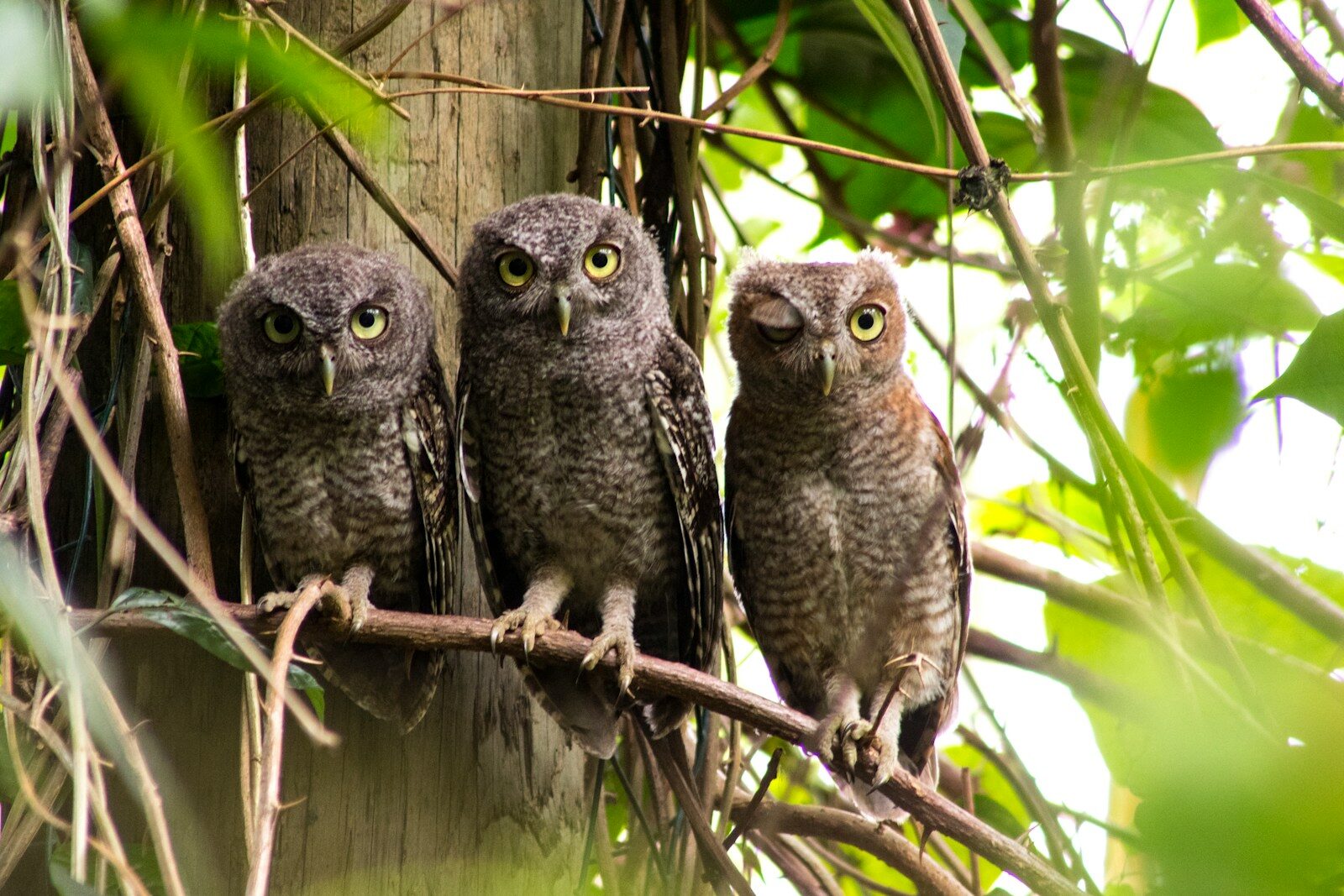
Owls have captivated humans for centuries with their mysterious nocturnal habits and piercing eyes. These remarkable birds possess abilities that seem almost supernatural, from flying in complete silence to hunting prey they cannot even see. A group of owls is called a parliament, and most owl species have asymmetrical ears positioned at different heights on their heads, allowing them to pinpoint prey with remarkable accuracy in total darkness.
The term parliament of owls reflects the long-standing association between these birds and wisdom, dating back to ancient mythology and literature. But there’s far more to owls than symbolic names. From the barn owl hunting over moonlit fields to the great horned owl perched silently in forest canopies, each owl species has evolved extraordinary adaptations for life in the dark.
Understanding how owls gather, why their anatomy is so uniquely suited for nighttime hunting, and what makes their hearing so powerful reveals just how specialized these predators truly are. Their facial features work together like precision instruments, and their asymmetrical ear placement gives them a hunting advantage that few other animals possess.
Why Is a Group of Owls Called a Parliament?
The term “parliament” for a group of owls stems from medieval naming traditions and the bird’s long-standing association with wisdom in Western culture. This distinctive collective noun reflects how historical perceptions of owls as thoughtful, deliberative creatures influenced the language used to describe them.
Origins of Collective Nouns for Owls
Collective nouns for animals and birds can be traced back to Books of Courtesy in the Middle Ages. These medieval texts were essentially etiquette guides that taught proper speech and behavior to nobility and the educated classes.
The phrase “a parliament of owls” comes from medieval times, when people created poetic names for animal groups. Writers of that era imagined that owls, with their calm eyes and thoughtful faces, held meetings similar to human assemblies. The term was inspired by the way owls seem to “discuss” matters with their expressive faces and solemn postures.
While “parliament” remains the most recognized term, other collective nouns exist for owls including wisdom, congress, hooting, and stare. When flying, a group of owls is sometimes called a silence, referencing their remarkably quiet flight.
The Influence of Literature and Mythology
In literature, particularly in old fables and stories, owls were portrayed as wise and serious creatures—like members of a council or government meeting. This literary tradition reinforced the connection between owls and formal assemblies.
Greek mythology played a significant role in shaping these perceptions. The owl was sacred to Athena, the goddess of wisdom, which cemented the bird’s reputation as a symbol of knowledge and insight. This mythological association carried through centuries of European literature and folklore.
The anthropomorphic nature of the term “parliament” conjures images of nocturnal raptors gathered in solemn assembly. Medieval writers found these birds particularly intriguing due to their nocturnal habits and distinctive appearance, which seemed mysterious and otherworldly.
Symbolism of Owls: Wisdom and Intelligence
The connection between owls and wisdom extends beyond their naming conventions. Their large, forward-facing eyes give them an appearance that humans interpret as thoughtful or contemplative. This physical characteristic contributed to their symbolic association with intelligence.
Key symbolic traits attributed to owls:
- Observant nature – Their ability to see in darkness symbolized insight
- Silent movement – Represented careful deliberation and stealth
- Solitary behavior – Suggested deep contemplation and independence
- Distinctive calls – Seemed like communication or discussion
The term “parliament” stands out among animal group names for its elegance and unique association. While most birds are simply grouped in flocks, owls earned a term rooted in myth, symbolism, and history. This distinction reflects the special place these birds held in human imagination throughout the centuries.
How Owls Gather: When and Why Groups Form
Owls are primarily solitary hunters, but certain species do gather under specific circumstances. These gatherings happen most often during breeding season, migration periods, or when food sources are abundant in concentrated areas.
Do Owls Flock Together or Stay Solo?
Most owl species spend their lives alone, only coming together briefly to mate. Unlike many bird species that naturally form flocks, owls are territorial and prefer hunting solo to avoid competition for prey.
The solitary lifestyle makes sense for these nocturnal predators. Each owl needs a large hunting territory to sustain itself, and multiple owls in one area would quickly deplete available prey.
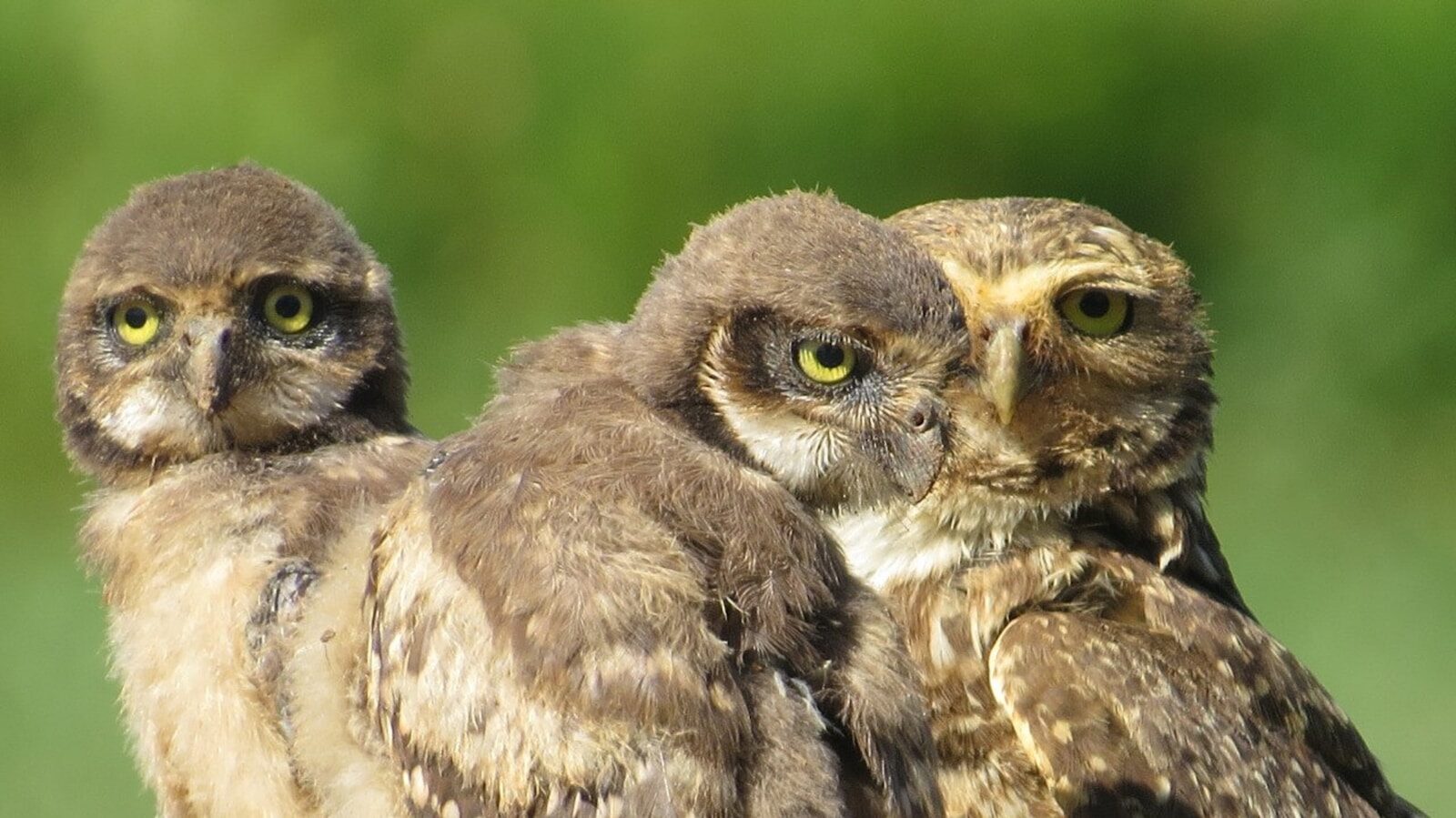
However, some situations break this pattern. Young owls sometimes roost together after leaving the nest but before establishing their own territories. During migration, certain species may temporarily gather in areas with plentiful food or suitable resting spots.
When groups do form, they’re called a parliament of owls, though such sightings remain rare in the wild.
Species Most Likely to Form Groups
Burrowing owls stand out as the most social owl species. These small, ground-dwelling birds often live in loose colonies, sharing the same general area while maintaining individual burrows.
Short-eared owls also demonstrate more social tendencies than most species. They sometimes hunt in small groups over open grasslands and marshes, particularly during winter when prey concentrations attract multiple birds.
A group of barn owls occasionally roosts together in barns or old buildings, especially during winter months. These gatherings typically include juvenile birds that haven’t yet claimed territories.
Long-eared owls may form communal winter roosts with up to 20 individuals. A group of snowy owls sometimes appears in areas where lemming populations boom, though they still hunt independently.
Seasonal Patterns and Group Behaviors
Winter brings the highest likelihood of seeing multiple owls together. Food scarcity pushes some species into smaller territories, creating occasional overlaps in roosting sites.
Migration periods also increase owl gatherings. Saw-whet owls, for instance, migrate in waves during fall, and multiple individuals may stop at the same woodland patch to rest.
Breeding season sees pairs form temporarily, but this hardly constitutes a group of owls. Males and females cooperate only for mating and raising young before returning to solitary lives.
Spring and summer see owls at their most territorial. Adults actively defend hunting grounds and rarely tolerate other owls nearby, making group formations extremely unlikely during these months.
Names for Groups by Species and Situation
The term parliament applies universally as the collective noun for owls, regardless of species. Other names include congress, stare, and hooting, though these appear less frequently in usage.
When owls fly together—an exceptionally rare sight—some call them a “silence” in reference to their quiet flight. This poetic name captures the eerie nature of multiple predators moving without sound.
Different species don’t have unique group names. Whether it’s a group of barn owls or snowy owls, “parliament” remains the standard term. The name originates from medieval times when owls symbolized wisdom, linking them to governing bodies.
Owl Anatomy: Binocular Vision, Facial Discs, and Ear Tufts
Owls possess specialized physical features that make them exceptional nocturnal hunters. Their forward-facing eyes provide depth perception, their circular facial feathers function as sound collectors, and those prominent head tufts serve purposes beyond what most people expect.
Binocular Vision & Head Rotation
Unlike most birds that have eyes on the sides of their heads, owls have large forward-facing eyes that provide binocular vision for accurate depth perception during low-light hunting. This stereoscopic vision is essential for judging distances when swooping down on prey in darkness.
The tradeoff is that owl eyes are fixed in their sockets. They can’t move their eyeballs to look around like humans do.
To compensate, owls developed the ability to rotate their heads up to 270 degrees. They have 14 neck vertebrae compared to the seven that humans have. Their vertebral circulatory systems are specially adapted with enlarged foramina and arterial slack to prevent cutting off blood flow to the brain during these extreme rotations.
Owls are also farsighted and cannot clearly see anything within a few centimeters of their eyes. They rely on filoplumes, which are hairlike feathers on their beaks and feet, to feel captured prey.
Facial Discs and Their Acoustic Purpose
The rounded frame of feathers forming the facial disc works like a built-in parabolic dish that collects and funnels sound waves toward the ear openings. Owls can adjust these specialized feathers to change how sound is directed, helping them detect even the faintest movements from potential prey.
The ear openings themselves sit on the sides of the head behind the eyes, hidden beneath the facial disc feathers. In many owl species, these openings are positioned asymmetrically at different heights.
This asymmetrical ear placement combined with the facial disc system allows an owl’s brain to construct an auditory map of space when locating prey. The slight time difference between when sound reaches each ear helps pinpoint exact locations in three-dimensional space, making it possible for species like the barn owl and barred owl to hunt successfully in total darkness.
Ear Tufts: What Do They Do?
The prominent feather tufts on top of certain owl species’ heads aren’t actually ears at all. These “ear tufts” are simply decorative display feathers and serve no function in hearing.
Species like the great horned owl and eagle owl sport these distinctive tufts. Scientists believe they play a role in communication and species recognition, helping owls signal to others in low-light conditions. The tufts may also aid in camouflage by breaking up the owl’s outline when roosting against tree bark.
Not all owl species have these tufts. Barn owls, barred owls, and many other species have smooth, rounded heads without any tuft features.
Superpowered Hearing: Asymmetrical Ears in Owls
Unlike most vertebrates, owls possess asymmetrical ears positioned at different heights on their skulls. This unique adaptation allows them to create a three-dimensional sound map of their environment, making them incredibly effective nocturnal hunters.
How Asymmetrical Ears Work
The asymmetry in owl ears creates two distinct advantages for hunting. The left ear opening typically sits higher than the right ear opening, allowing owls to detect sounds from below with the left ear and sounds from above with the right ear during flight.
When a sound reaches the owl’s ears, it arrives at slightly different times and volumes. This creates what scientists call interaural time difference (ITD) and interaural level difference (ILD). The ITD helps the owl determine horizontal location, while the ILD pinpoints vertical elevation.
The owl’s facial disc acts like a satellite dish, capturing and funneling sound waves directly into the ear canals. The asymmetrical placement means sounds hit each ear at different angles, giving the owl precise information about exactly where prey is located in three-dimensional space.
Species With the Most Remarkable Hearing
Barn owls exhibit some of the most pronounced ear asymmetry among all owl species. One ear opening points upward while the other points downward, enhancing their ability to hunt small mammals in open grasslands.
Several owl species display asymmetrical ears, including:
- Northern saw-whet owls (Aegolius acadicus)
- Long-eared owls (Asio otus)
- Great grey owls (specialized in detecting prey under snow)
The degree of asymmetry varies based on hunting strategy and habitat. Snowy owls, which hunt in open tundra with better visibility, have less pronounced ear asymmetry compared to forest-dwelling species. Burrowing owls also show less asymmetry since they hunt more visually during daylight hours.
Pinpointing Prey in Complete Darkness
Owls can hunt successfully in total darkness by relying entirely on sound rather than vision. Experiments have shown that owls are sensitive to sounds made by their prey, not heat or smell, and these sound cues are both necessary and sufficient for locating mice from a distance.
The asymmetrical ear placement allows an owl to calculate prey location with remarkable precision. When both ears receive sound at the same volume and timing, the prey sits directly ahead. Any difference tells the owl exactly how to adjust its approach.
This tiny separation between when sound hits one ear compared to the other allows the owl to detect the source with greater precision than animals with symmetrically placed ears. A barn owl can strike a mouse in pitch-black conditions with accuracy within one degree of arc.
Owls on the Hunt: Silent Flight and Nocturnal Life
Owls dominate the night through specialized feathers that eliminate flight noise and sensory adaptations that let them detect prey in complete darkness. These nocturnal hunters use a combination of silent approaches and precise hearing to catch meals other predators can’t reach.
How Silent Flight Gives Owls an Edge
Owls achieve silent flight through a unique modification of their primary wing feathers. The forward edge of these feathers is serrated rather than smooth, which disrupts airflow over the wing and eliminates the vortex noise that typical birds create when flying.
This adaptation allows owls to arrive at their prey without making a sound. The silence gives them a critical hunting advantage since small mammals and other prey animals can’t hear them approaching until it’s too late.
Key benefits of silent flight:
- Prey can’t detect the owl’s approach
- Allows hunting in dense forests where noise would alert animals
- Enables multiple hunting attempts in the same area
The structural modification is present in all owl species, making it a defining characteristic of these nocturnal birds of prey.
Nocturnal Adaptations for Stealth
Most owls are nocturnal hunters, active when other predators have settled for the night. Their eyes contain specialized cells that maximize light sensitivity, letting them see in conditions humans would consider pitch black.
Beyond vision, owls rely heavily on their hearing. The facial disc of feathers acts as a sound collector, funneling even the faintest noises toward their ear openings. This concave surface of stiff feathers enhances their already sensitive hearing capabilities.
Owls also develop intimate knowledge of their hunting territories. Studies show that individual owls hunt the same areas night after night, memorizing perch heights, obstacles, and terrain features. This familiarity complements their sensory abilities and helps them navigate in darkness.
Their nocturnal lifestyle reduces competition with daytime raptors like hawks and eagles, giving them exclusive access to prey that emerges after sunset.
Famous Owl Hunters: Barn Owl, Great Horned Owl, and More
The barn owl stands out as one of nature’s most effective nocturnal predators. Experiments have proven that barn owls can locate and capture prey by sound alone in completely dark, soundproofed environments. They pinpoint prey location to within 1.5 degrees in both horizontal and vertical planes.
Great horned owls hunt larger prey than most other species, including rabbits, skunks, and even other raptors. Their powerful talons and aggressive nature make them formidable predators across North and South America.
Notable owl hunters include:
- Snowy owl: Hunts in Arctic tundra, often during daylight hours due to extended polar summers
- Barred owl: Specializes in hunting small mammals in dense forests of North America
- Elf owl: The smallest owl species, focusing on insects and small arthropods in desert environments
- Eagle owl: Europe’s largest owl species, capable of taking prey as large as foxes and young deer
Each species has adapted its hunting strategy to match its specific habitat and available prey.
Owl Encounters: Spotting Groups in the Wild and Modern Tools
Observing owls together requires timing and patience, as most species are solitary. Technology and community resources now make tracking these rare gatherings more accessible for enthusiasts.
When to Observe a Parliament in Nature
Seeing owls in groups is uncommon since they typically hunt and live alone. The best chances come during specific times of year when their behavior shifts.
Mating season brings owls together more frequently, usually between late winter and early spring depending on the species. During this period, they become more vocal and visible as they establish territories and attract mates.
Parents with recently fledged young create temporary family groups in late spring and summer. These gatherings dissolve once the juveniles gain independence and disperse to find their own territories.
Dawn and dusk offer the highest probability of spotting a parliament of owls since many species are crepuscular. Communal roosting sites, where multiple owls share safe daytime locations, provide another opportunity to witness groups.
Short-eared owls sometimes hunt together in open grasslands during winter. Barn owls occasionally roost in small groups in structures like abandoned buildings or large tree cavities.
How Birders and the Owls App Can Help
Birders contribute valuable sighting data that helps others locate owl populations and understand their patterns. Local birding groups often maintain logs of reliable owl territories and seasonal movements.
The eBird mobile app allows users to log owl sightings with precise location data and time stamps. This crowdsourced information creates real-time maps showing where owls have been recently spotted.
Useful tools for owl tracking:
- eBird for logging and finding recent sightings
- Merlin Bird ID for identifying owl species by call or photo
- Local Audubon chapter websites for guided owl walks
- iNaturalist for community-verified observations
Many birding communities organize nighttime owl prowls during peak seasons. These guided walks take participants to known territories where experienced leaders use call playback responsibly to elicit responses.