
A Lobster Born in Maine Came Out Half Blue and Half Orange — The 50-Million-to-One Genetic Quirk Made It a Viral Marine Aquarium Star
A Maine lobsterman’s routine haul turned extraordinary when he pulled up a creature that shouldn’t exist according to the odds: a lobster split perfectly down the middle, half brilliant blue and half normal orange. This split-color lobster represents a one-in-50-million genetic phenomenon where the crustacean is simultaneously male on one side and female on the other, a condition known as gynandromorphy. The unusual catch quickly became a viral sensation, captivating millions who had never seen anything like it.
While most people only encounter the typical reddish-brown American lobster at seafood restaurants, the waters off Maine hide a spectrum of genetic rarities. Orange lobsters occur in only one in 30 million individuals, while blue specimens and other color variations turn up with similar astronomical odds. These living anomalies have become more than just curiosities—they’re now at the center of scientific investigations into lobster genetics and marine biology.
From research labs studying thousands of genes to conservation efforts releasing rare juvenile lobsters back into the ocean, these colorful crustaceans are teaching scientists about genetic variation in ways they never anticipated. The stories behind these creatures reveal not just biological mysteries, but also the dedicated lobstermen and researchers who recognize something special when they see it.
Discovery of the Split-Color Lobster
On April 16, 2026, a fishing crew hauled in an extraordinary crustacean that would soon captivate marine biology enthusiasts worldwide. The lobster’s perfectly divided orange and brown coloring made it a 1-in-50-million discovery that would escape the dinner plate entirely.
The Catch Off Cape Cod
The crew aboard the Timothy Michael was fishing off Cape Cod when they spotted something unusual in their haul. One lobster stood out immediately with its striking appearance—half orange-red and half dark brown, with a straight line dividing the two colors from head to tail.
The Wellfleet Shellfish Company, which operated the vessel, recognized they had something special. Instead of sending the creature to market like their other catches, they made a different call. The split-color lobster weighed over three pounds, indicating it had survived in the wild for quite some time despite its conspicuous coloring.
How the Lobster’s Unique Colors Saved Its Life
The Wellfleet Shellfish Company decided not to sell the rare lobster and instead donated it to the Woods Hole Science Aquarium. This decision essentially saved the creature’s life, as it would otherwise have ended up on someone’s plate.
Dan Brandt, chief operating officer of the company, noted that lobsters with unusual coloring typically lack the camouflage needed to thrive. The fact that this one reached over three pounds meant it had beaten serious odds. Most American lobsters display mottled brown with hints of green or blue to blend with the ocean floor and avoid predators.
Viral Fame and Public Reaction
The company announced the discovery on social media, declaring the lobster was “heading somewhere even more special” than the market. The Woods Hole Science Aquarium, established in 1875 and the nation’s oldest public marine aquarium, accepted the donation despite being closed for repairs.
Once the aquarium reopens in early 2027, the split-color lobster will be among the first animals displayed. Aquarium biotechnician Julia Studley confirmed the creature is currently living in a large tank at the nearby Marine Biological Laboratory, where she’s exploring cave structures and eating fish. Staff members haven’t named her yet, waiting to get to know her personality better before choosing something that fits.
What Causes Split-Color Lobsters?
The dramatic color divide in split-color lobsters stems from a rare genetic phenomenon where two fertilized eggs fuse before development. This biological quirk creates lobsters carrying two distinct sets of genetic information, each controlling pigmentation on opposite sides of the body.
Genetic Chimerism and Gynandromorphism
Split-colorization occurs when two fertilized, unlaid eggs contact each other, causing one to absorb the other during early development. This creates a chimera—an organism carrying cells with different genetic blueprints as if they came from multiple individuals.
The result is a lobster that looks like two separate animals spliced together lengthwise. One side might be orange-red while the other stays dark brown, with a clean line dividing the two halves from head to tail.
Sometimes this fusion leads to gynandromorphism, where the lobster is essentially half male and half female at a cellular level. The bilateral split means each side develops independently with its own sex characteristics and coloration. This condition isn’t unique to lobsters—it appears in butterflies, bees, and even birds like the green honeycreeper.
Pigmentation and Color Variations
American lobsters typically sport mottled brown shells with hints of drab green or blue that help them blend into the ocean floor. These earthy tones provide crucial camouflage from predators like cod and octopuses.
The chimeric condition allows split-color lobsters to store color pigments differently on either side of their shell. One genetic set might produce the typical brown coloration while the other creates bright orange, red, or even blue hues. The striking contrast makes these lobsters exceptionally vulnerable in the wild since they lack proper camouflage.
The fact that split-color specimens survive to catchable sizes of three pounds or more is remarkable. They’ve somehow evaded predators despite standing out like beacons on the seafloor.
Comparison to Other Rare Lobster Colors
Split-color lobsters rank among the rarest color variations at roughly 1 in 50 million odds. Other unusual colorations occur more frequently but still qualify as exceptionally rare catches.
| Lobster Color | Rarity |
|---|---|
| Split-color | 1 in 50 million |
| Calico | 1 in 30 million |
| Cotton candy | 1 in 100 million |
| Blue | 1 in 2 million |
| Yellow/Orange | More common than split |
| Albino | Extremely rare |
Blue lobsters get their coloration from genetic mutations affecting crustacyanin proteins. Orange and yellow lobsters result from different pigment expressions in their shells. Calico lobsters display bright orange shells speckled with black and blue, while cotton candy lobsters show pastel pink and purple hues.
Unlike split-color specimens that carry two genetic blueprints, these other color variations stem from single genetic mutations affecting pigment production throughout the entire animal.
Marine Institutions and Lobster Conservation
Marine research facilities and local organizations work alongside fishing communities to protect lobster populations through scientific study and hands-on conservation programs. These efforts combine academic research with practical industry knowledge to sustain maine lobster fisheries for future generations.
Wellfleet Shellfish and Community Efforts
Local shellfish operations have become key players in coastal conservation work. Wellfleet shellfish operations collaborate with fishing communities to monitor water quality and track shellfish populations in Massachusetts waters. These companies often share data with state agencies to help inform regulations that protect both shellfish and lobster habitats.
Community groups along the coast have partnered with commercial fishermen to develop informal management practices. These grassroots efforts focus on protecting breeding grounds and establishing voluntary catch limits in specific areas. The approach lets fishermen take ownership of conservation while maintaining their livelihoods.
Many coastal towns now host educational programs that teach residents about sustainable fishing practices. These initiatives bring together scientists, fishermen, and local businesses to create conservation strategies that work for everyone involved.
Role of Woods Hole Science Aquarium
The Woods Hole Science Aquarium serves as a research hub and public education center on Cape Cod. Scientists at the facility study lobster behavior, growth patterns, and responses to changing ocean conditions. The aquarium houses live specimens that help researchers understand how temperature shifts affect lobster development.
Public exhibits at the facility showcase both common and rare lobsters to visitors. These displays explain the biology behind unusual color variations and the importance of genetic diversity in wild populations. Staff members use these eye-catching specimens to discuss broader conservation topics with thousands of visitors each year.
Marine Biological Laboratory Support
The Marine Biological Laboratory conducts advanced genetic research on various marine species. Their work includes studying DNA sequences that determine lobster characteristics, from shell color to disease resistance. Scientists at the lab collaborate with universities to decode the genetic factors that influence lobster survival rates.
Research teams analyze tissue samples from lobsters caught throughout New England waters. This genetic mapping helps identify distinct populations and tracks how they respond to environmental pressures. The data informs fishery managers about which areas need stronger protections.
Research at Marine Science Centers
Universities along the coast operate marine science facilities dedicated to lobster research. The University of New England’s Marine Science Center houses rare color-variant lobsters for genetic studies. Dr. Markus Frederich and his team collect DNA samples from these unusual specimens to understand the mutations that create their distinctive appearances.
Graduate students at these facilities study lobster larvae development and survival rates. Their research examines how warming waters affect young lobsters during critical growth stages. Conservation practices supported by Maine lobstermen help make fisheries more resilient to climate change.
The Seacoast Science Center and similar institutions run programs that connect scientific findings with fishing communities. They translate complex research into practical guidelines that help fishermen adjust their methods as ocean conditions shift.
Scientific Research Into Rare Lobster Genetics
Researchers at the University of New England have launched a groundbreaking study to decode the DNA behind rare lobster colors, with Professor Markus Frederich leading genetic analysis of over 15,000 genes extracted from unusually colored specimens.
Work by Markus Frederich
Markus Frederich at UNE’s marine science program has dedicated his research efforts to understanding the molecular basis behind rare shell coloration in lobsters. The project started unexpectedly when he received rare-colored specimens from local lobstermen.
Frederich told reporters the research doesn’t necessarily address a global crisis, but it teaches students transferable skills applicable to other scientific disciplines. He described the work as exploration driven by pure curiosity rather than immediate practical application.
His team has been analyzing DNA samples from lobsters displaying orange, blue, calico, and split-color patterns. The genetic research program is believed to be the first of its kind focused specifically on lobster coloration genetics.
University and Science Center Collaborations
The University of New England houses large seawater tanks at its Girard Marine Science Center in Biddeford. These facilities have become home to a collection of rare-colored lobsters donated by Maine lobstermen working in the Gulf of Maine.
The research team includes Ph.D. students, UNE alumni, and graduate research assistant Aubrey Jane, who studies lobster larvae. In May 2025, researchers released 32 orange and blue juvenile lobsters into tide pools at Ram Island, UNE’s own research station.
Student Claire Fecteau-Volk worked on the project from its inception and participated in the lobster release. The team spread the juveniles across different pools to give them space before sending them back into their natural environment.
Advances in Genetic Sampling
Frederich has developed noninvasive methods to extract genetic samples from lobsters without harming them. This technique allows researchers to study the animals while keeping them healthy and alive.
The team collected all necessary genetic data before releasing the juvenile lobsters. With DNA samples secured, they opted to return the specimens to the ocean to complete their life cycles naturally.
Frederich maintains a collection of unusually colored lobsters at the university’s labs. He has documented the offspring of an orange lobster named Peaches, who produced thousands of eggs while housed at the facility.
Educational Outreach
Undergraduate students like Fecteau-Volk have gained hands-on experience working with rare marine specimens. She described working in Frederich’s lab with rare-colored lobsters as a once-in-a-lifetime opportunity for an undergraduate researcher.
The project teaches students practical skills in genetics, marine biology, and scientific methodology. Graduate and undergraduate researchers alike participate in specimen care, genetic sampling, and data analysis.
Frederich views the work as an educational tool that demonstrates the value of curiosity-driven science. He compared the research approach to a child exploring the world with open eyes, trying to understand what exists without needing an ultimate practical goal.
Famous Rare Lobsters and Their Stories
Fishermen and researchers have discovered several exceptionally rare lobsters that captured public attention, with some becoming permanent residents of research facilities and aquariums. These unusual crustaceans range from vivid blues and oranges to remarkable split-colored specimens that defy typical odds.
Blue, Yellow, and Orange Lobsters
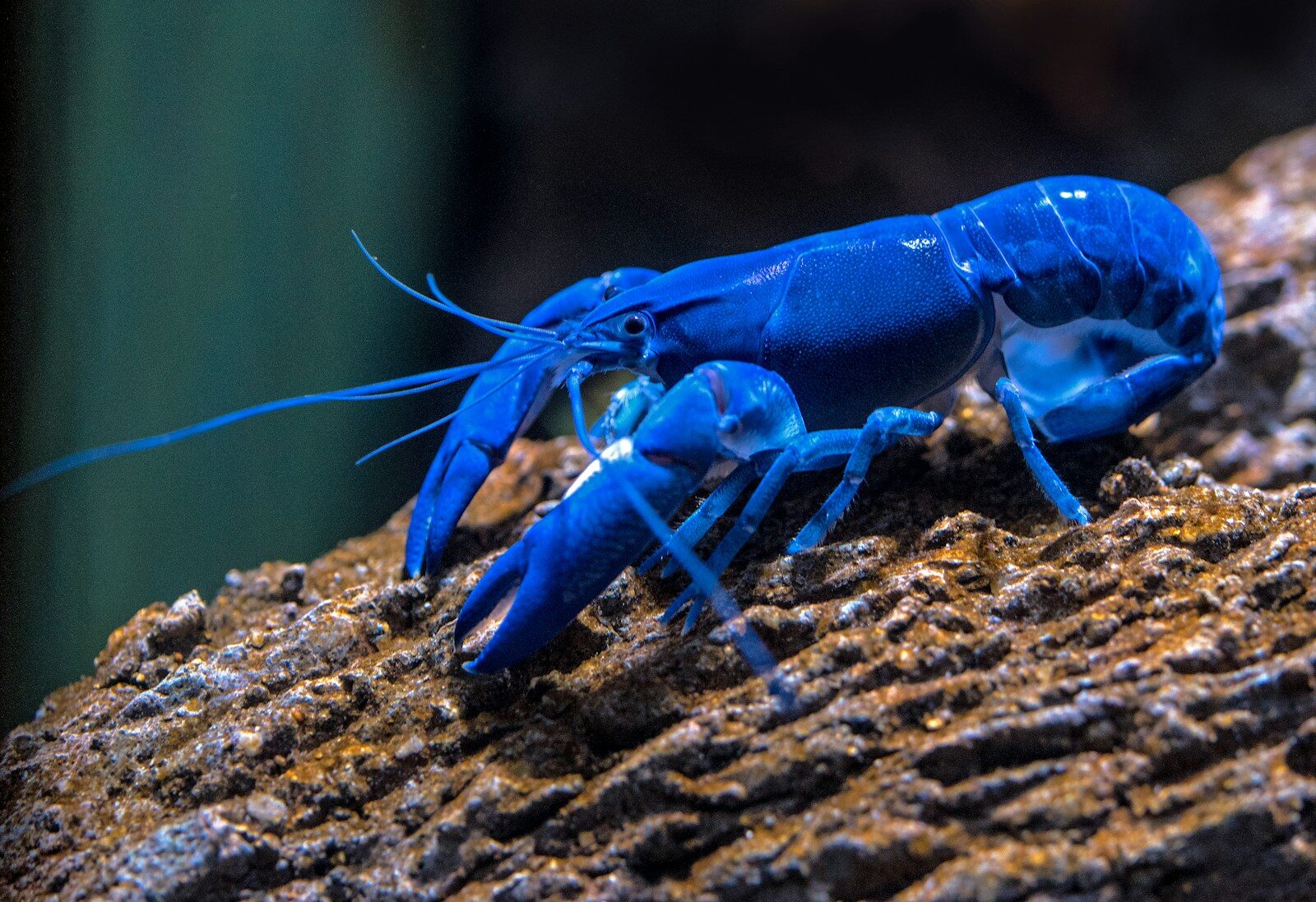
The University of New England houses multiple rare colored lobsters donated by Maine fishermen, including blue, orange, and yellow specimens. Blue lobsters appear roughly once in every 2 million catches, making them the most common of the rare varieties.
Peaches, a one-clawed orange lobster caught in Casco Bay, became notable not just for her estimated one-in-30-million coloration but for producing over 100 offspring. At least 40 of her babies inherited her distinctive orange hue. Another orange lobster at UNE named Pineapple awaited egg hatching as of 2024.
Scientists caution that commonly cited rarity estimates shouldn’t be treated as definitive figures. Genetic and dietary factors influence lobster coloration, and no comprehensive database tracks these abnormalities.
Gynandromorphic and Split Lobsters on Display
A split-colored lobster named Currant features vivid blue claws and legs alongside orange knuckles, with a shell perfectly divided between blue and brown. Researchers estimate such split lobsters occur at a rate of one in 50 million.
The most remarkable specimen discovered was Bowie, a gynandromorphic lobster that’s half-male and half-female, with corresponding blue and normal coloration on each side. The blue male side contrasts sharply with the female side’s typical coloring. Marine biologists called it potentially the rarest lobster in the Gulf of Maine due to its dual genetic makeup.
UNE maintains a split-colored orange and brown lobster alongside its other rare specimens for ongoing genetic research.
Naming Contests and Community Involvement
Many rare lobsters receive distinctive names that reflect their appearance or discovery circumstances. Peaches earned her name from her peachy-orange coloration, while Pineapple followed a similar fruit-themed naming convention at UNE’s facility.
Bowie’s name likely referenced the late musician David Bowie, known for his gender-bending performances and dual-toned aesthetic. The lobster’s half-blue, half-orange appearance made it a social media sensation after fishermen shared videos explaining its extraordinary rarity.
UNE’s collection of rare lobsters includes specimens studied by student researchers who work directly with these creatures. The university released some juvenile lobsters, including rare orange ones, into tide pools at Ram Island research station as part of long-term genetic studies.
Why Unusual Lobsters Matter
These rare color variations reveal important information about lobster genetics and help scientists engage the public in marine conservation efforts. The split-colored lobsters and other unusual specimens provide researchers with living laboratories to study genetic expression in American lobsters.
Genetic Diversity in Marine Life
Researchers at the University of New England are studying rare lobster DNA to understand the molecular basis for color variations in Maine lobster populations. These split-color lobsters and other unusual specimens help scientists identify specific genes that control shell development and pigmentation.
Dr. Markus Frederich’s team discovered genes affecting shell color while conducting broader research on thermal tolerance in lobsters. The work examines how temperature changes impact lobster development from eggs to adults, which helps create models showing how climate change affects Gulf of Maine populations.
Color variations studied include:
- Blue lobsters (1 in 2 million)
- Yellow lobsters (1 in 30 million)
- Orange lobsters (1 in 30 million)
- Split-color lobsters (1 in 50 million)
The split-color pattern occurs when two embryos fuse together in early development, creating a chimera lobster with distinct color zones. This rare color scheme results from two eggs fusing together to create the dramatic half-and-half appearance.
Conservation Messages and Public Engagement
Rare lobsters generate significant public interest that marine scientists leverage for conservation education. When lobstermen share photos of unusual catches on social media, the images often go viral and spark conversations about marine ecosystems.
The arrival of 140 baby lobsters in various colors at UNE’s Marine Science Center creates opportunities for student researchers to study these animals while engaging broader audiences. Local lobstermen regularly donate rare specimens they catch, demonstrating the fishing community’s investment in scientific research.
The viral nature of these lobsters helps people connect with marine biology in tangible ways. A bright blue or perfectly split lobster captures attention far more effectively than abstract conservation messages. These charismatic crustaceans serve as ambassadors for Gulf of Maine ecosystems, drawing attention to broader issues affecting marine life including warming waters and habitat changes.