Sloths Move So Slowly That Algae Grows in Their Fur — The Greenish Tint Acts as Camouflage and Even Feeds a Tiny Ecosystem of Insects on Their Bodies
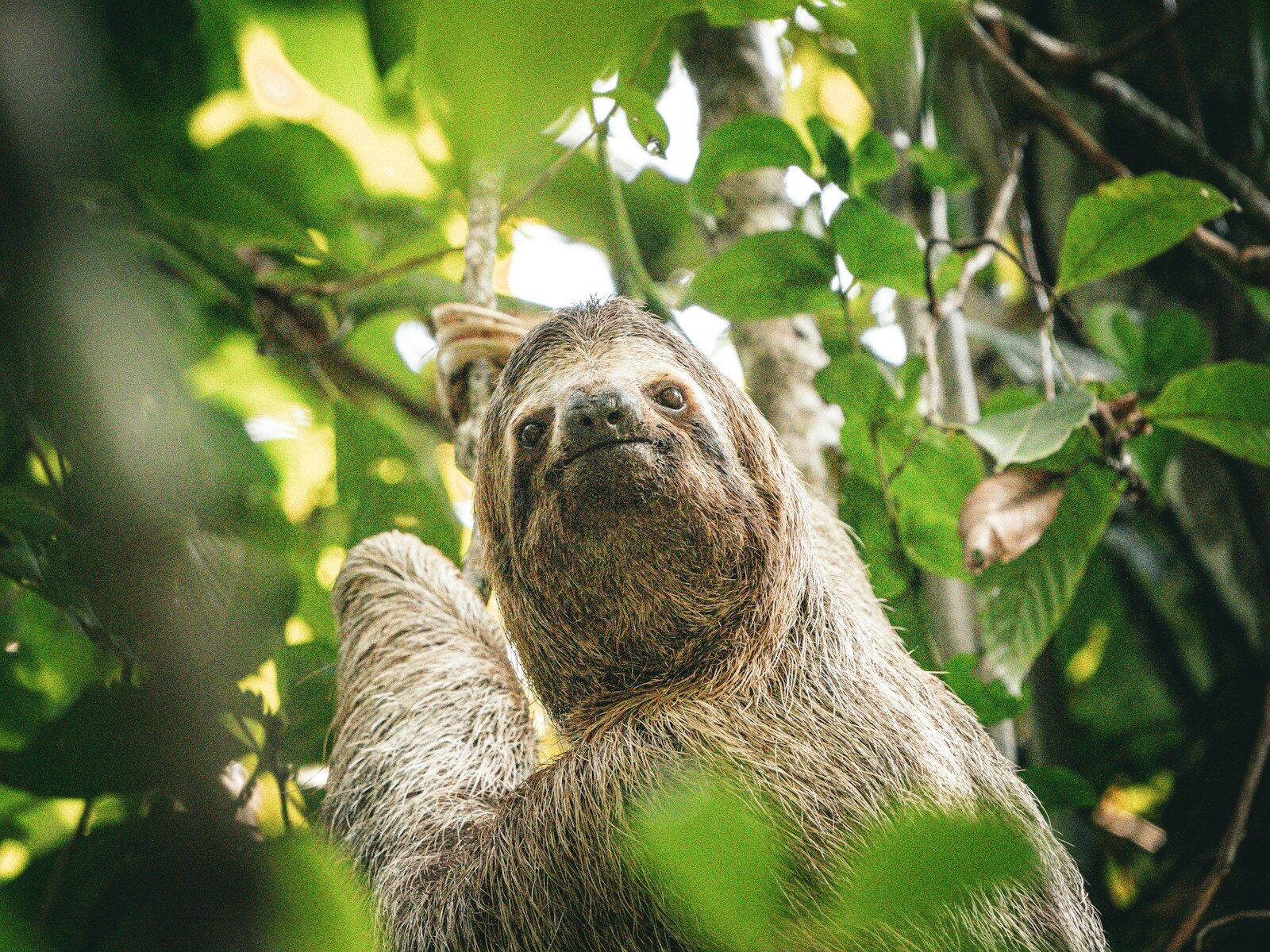
Sloths rank among the slowest creatures on Earth, moving at such a leisurely pace that their fur becomes a living garden. Green algae grows directly on a sloth’s shaggy coat, transforming the animal into a mobile ecosystem complete with insects, moths, and beneficial microorganisms. This isn’t a hygiene problem but rather an evolutionary advantage that helps these tree-dwelling mammals survive in their rainforest homes.
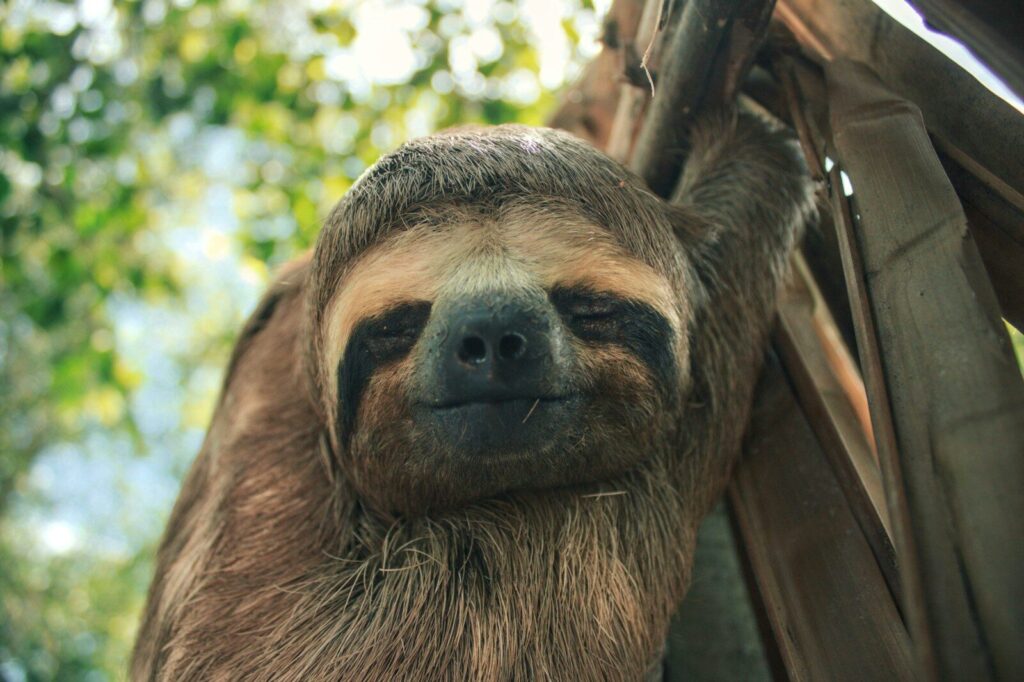
The slow-moving sloth spends most of its life hanging upside down in the tropical forests of Central and South America, where its unusual greenish tint provides remarkable camouflage among the leaves and branches. While other animals might groom away such growth, sloths have developed a mutually beneficial relationship with the organisms living in their fur. The algae gets a home and transportation, while the sloth gains protection from predators that hunt by sight.
This fascinating adaptation reveals how these creatures have evolved a completely different survival strategy from most mammals. From their unique skeletal structure to their bizarre bathroom habits, sloths challenge our understanding of what it means to thrive in the wild. Their fur hosts an entire miniature world that scientists are still working to fully understand.
Why Sloths Are So Slow
Sloths have evolved to be slow-moving mammals due to their exceptionally low metabolic rate, which operates at roughly 40-45% of what would be expected for animals their size. This deliberate slowness functions as a highly effective survival strategy in the rainforest canopy where they spend most of their lives.
Low Metabolic Rate Explained
Sloths have a slow metabolism that sets them apart from most other mammals. Their metabolic rate runs at just 40-45% of what scientists would expect for a mammal of their size.
This low metabolic rate means these arboreal mammals process food incredibly slowly. Their bodies extract energy from their leaf-based diet at a leisurely pace, which is both a necessity and an advantage given the poor nutritional content of their food source.
The slow metabolism allows sloths to survive on minimal caloric intake. Leaves provide very few calories and nutrients, so burning energy slowly helps them make the most of what little fuel they consume. This physiological adaptation has allowed members of the order Pilosa to thrive for millions of years.
Their bodies operate so efficiently at low speeds that a slow-moving sloth can function perfectly well on a fraction of the energy other mammals require.
Survival Strategy in the Rainforest
Being slow has helped sloths survive for nearly 64 million years in the competitive rainforest environment. Their sluggish pace actually protects them from predators rather than making them vulnerable.
Predators like jaguars and hawks hunt primarily by detecting movement. Slow and deliberate motions blend more easily with surrounding foliage, while sudden movements catch a predator’s eye. By moving at roughly 0.15 miles per hour through the canopy, sloths essentially become invisible to visual hunters below.
Their slowness doesn’t attract much attention from carnivorous animals that rely on spotting quick movements. The greenish algae growing in their fur provides additional camouflage, making them nearly impossible to distinguish from the leaves around them.
Sloth Physiology and Energy Conservation
Sloth physiology is characterized as heterothermic, meaning they have imperfect control over their body temperature. Their internal temperature normally ranges between 25 and 35 °C (77 and 95 °F) but can drop as low as 20 °C (68 °F).
At these lower temperatures, the animals become torpid and even less active than usual. This flexible temperature regulation helps them conserve energy when conditions demand it.
Their entire physical design favors energy conservation over speed. Every aspect of their biology works together to minimize caloric expenditure while maximizing survival in their arboreal habitat.
The slow-moving sloth lifestyle represents a perfectly tuned system where minimal energy input supports long-term survival. Their bodies simply don’t need to be fast to thrive in the rainforest canopy.
Where Sloths Live and Their Unique Tree-Dwelling Lifestyle
Sloths inhabit the lowland tropical forests of Central and South America, spending nearly their entire lives high in the rainforest canopy. Their bodies have evolved specifically for an upside-down existence among the branches.
Life High in the Rainforest Canopy
Sloths make their home in the rainforest canopy where they can be found sunning, resting, or feeding on leaves. They rarely descend to the ground except for bathroom breaks approximately every six days.
The canopy provides everything these animals need. They move between branches using their hooklike claws, searching for leaves and shoots to eat. Their slow movements help them avoid detection by predators like jaguars and harpy eagles.
Three-toed sloths often sit in tree forks while two-toed species prefer hanging horizontally from branches and vines. Both spend about 90 percent of their time completely motionless. When they do sleep, they either perch in tree forks or hang with all four feet bunched together and their heads tucked against their chests, resembling clumps of dead leaves.
Hanging Upside Down: Adaptations and Behaviors
Their limbs evolved for suspending the body rather than supporting it. This means sloths are completely helpless on the ground unless they can grasp something to drag themselves along with their claws.
The forelimbs of three-toed sloths are 50 percent longer than their hind limbs. All four feet have three long, curved, sharp claws perfect for gripping branches. Two-toed species use similar adaptations to maintain their hanging lifestyle.
Three-toed sloths have eight or nine neck vertebrae instead of the typical seven found in most mammals. This allows them to rotate their heads through a 270-degree arc while hanging upside down, helping them scan for food and threats without moving their bodies.
Geographic Range in South America
All six living sloth species are limited to Central and South America’s tropical regions. The brown-throated three-toed sloth (Bradypus variegatus) has the widest range, occurring from Honduras to northern Argentina.
The pale-throated three-toed sloth (Bradypus tridactylus) lives in northern South America. The maned sloth (Bradypus torquatus) has a much more restricted habitat in the small Atlantic forest of southeastern Brazil. The pygmy three-toed sloth (Bradypus pygmaeus) exists only on Isla Escudo de Veraguas, a small Caribbean island off Panama’s northwestern coast.
Two-toed sloths also occupy various ranges throughout Central and South American rainforests. Temperature plays a critical role in where sloths can survive since they have imperfect control over their body temperature, which normally ranges between 25 and 35°C.
Types of Sloths: Two-Toed, Three-Toed, and Ancient Giants
Modern sloths split into two distinct families roughly 28 to 30 million years ago, with three-toed and two-toed sloths evolving similar tree-dwelling lifestyles independently through convergent evolution. These living species represent just a fraction of sloth diversity, as massive ground sloths once roamed the Americas before going extinct around 11,000 years ago.
Three-Toed vs. Two-Toed Sloths
The naming convention for sloths can be misleading. All sloths actually have three toes on their hind limbs, but they differ in the number of fingers on their forelimbs—two-toed sloths have two digits while three-toed sloths have three.
Three-toed sloths belong to the genus Bradypus and include four species: the brown-throated, pale-throated, maned, and pygmy three-toed sloths. These animals move more slowly and have shorter, grayer fur with a pronounced green tint from algae growth. They possess eight or nine cervical vertebrae, unlike most mammals which have seven.
Two-toed sloths fall under the genus Choloepus and consist of two species: Linnaeus’s two-toed sloth and Hoffmann’s two-toed sloth. These sloths have longer, shaggier fur that tends to be brown or grayish-brown without the intense green coloration of their three-toed relatives. They’re slightly larger overall and have five to seven neck vertebrae.
Adaptations Across Species
Both sloth families evolved remarkable adaptations for their arboreal lifestyle despite their distant evolutionary relationship. Their slow metabolism allows them to survive on a low-energy diet of leaves while their deliberate movements help them avoid detection by predators that hunt by sight.
The algae growing in their fur serves multiple purposes across species. In three-toed sloths, the symbiotic relationship with green algae is highly developed, providing camouflage in the forest canopy and even nutrients. Two-toed sloths also host algae and small invertebrates, though this relationship isn’t as pronounced.
Key adaptations shared by modern sloths:
- Long limbs for hanging from branches
- Rounded heads with tiny ears
- Grooved hair that hosts algae
- Ability to rotate their heads extensively
- Strong grip despite minimal muscle mass
Size varies by species, with sloths ranging from 60 to 80 cm long and weighing between 3.6 to 7.7 kg.
The Story of Giant Ground Sloths
Ancient sloths looked dramatically different from today’s tree-dwellers. Ground sloths were mostly terrestrial animals that reached sizes rivaling elephants, with Megatherium being one of the largest examples. These massive creatures belonged to the order Pilosa and inhabited both North and South America.
Ground sloths thrived for millions of years before disappearing around 11,000 years ago. Evidence suggests human hunting played a significant role in their extinction, as remains show these animals were killed, cooked, and eaten. Climate change at the end of the last ice age may have contributed as well.
Some ground sloths developed unusual adaptations. Thalassocnus lived along South America’s Pacific coast and evolved into a semiaquatic or possibly fully aquatic species, becoming specialized bottom feeders of seagrass similar to modern manatees. Caribbean species like Megalocnus survived until about 5,000 years ago before humans colonized the Greater Antilles islands.
Sloth Fur: Home to a Mini Jungle
A sloth’s coat isn’t just hair—it’s a living habitat. The unique structure of sloth fur creates ideal conditions for algae, fungi, and countless other organisms to flourish, turning each animal into a mobile ecosystem.
The Structure of Sloth Fur
Sloth hairs have a distinctive architecture that sets them apart from other mammals. Each hair contains grooves and microcracks running along its length, creating tiny valleys and ridges on the surface.
These microcracks provide the perfect environment for algae and fungi to thrive. The crevices trap moisture and nutrients, offering protection from direct sunlight while maintaining consistent humidity levels. This specialized structure essentially turns each hair into a miniature greenhouse.
The grooves also help organisms anchor themselves securely to the fur. Unlike smooth hair that might shed microorganisms easily, these textured surfaces allow algae and other life forms to establish permanent colonies. The result is a stable home for millions of tiny residents.
How Green Algae Colonize Sloths
Green algae from the genus Trichophilus are the primary colonizers of sloth fur. These algae spores drift through the rainforest air and land on sloths, where they quickly take root in the hair’s microcracks.
The algae benefit from consistent humidity, protection from harsh sunlight, and access to minerals from the sloth’s skin. As the colonies grow, they give the sloth’s fur a greenish tinge that allows them to blend into the rainforest canopy. This camouflage helps sloths avoid detection by visual predators like harpy eagles.
The relationship works both ways. While the algae get a safe place to live, the sloth gains protective coloration that’s essential for survival in the wild.
Moss, Fungi, and Other Microorganisms
Beyond green algae, sloth fur hosts an impressive array of other organisms. Biologists investigating these microorganisms in 2014 discovered species of algae and fungi that have not been found anywhere else in the world.
Some fungal strains show promising medical applications. Researchers are currently studying them for potential use in treating malaria, Chagas disease, and even breast cancer. Bacteria living in the fur of Costa Rican sloths also produce antibiotics, which could have implications for human medicine.
Moths add another layer to this ecosystem. Species like Cryptoses choloepi live exclusively in sloth fur and cannot exist without their host. Sloth fur also hosts different species of sloth moths, with three-fingered sloths typically carrying more than two-fingered varieties—sometimes over 120 moths on a single animal.
The Hidden Ecosystem: Algae, Moths, and More
A sloth’s fur hosts green algae from the genus Trichophilus, which thrives in the grooves of sloth hair and provides camouflage. Specialized moths called sloth moths complete their entire life cycle tied to these slow-moving mammals, contributing nutrients that help algae flourish.
Mutualism Between Sloths and Algae
Green algae species, particularly from the genus Trichophilus, live exclusively in sloth fur and nowhere else on Earth. The relationship works both ways—sloths get excellent camouflage from the greenish tint, while algae receive consistent humidity, protection from harsh sunlight, and access to minerals from the sloth’s skin.
Sloth hair has specialized structures that make this partnership possible. Two-fingered sloths have longitudinal grooves running along their hair shafts, while three-fingered sloths have transverse cracks. These cracks and grooves create perfect growing conditions for algae colonies to establish themselves.
The portable food source benefits sloths directly, as they sometimes consume the algae growing on their own fur. This supplemental nutrition adds variety to their leaf-heavy diet.
The Sloth Moth Life Cycle
Cryptoses choloepi, a pyralid moth species, lives exclusively in sloth fur. These insects have evolved a remarkable dependence on their slow-moving hosts.
The life cycle works like this:
- Adult moths live in the sloth’s fur
- When sloths descend to defecate (about once per week), female moths fly off
- Moths lay eggs in the fresh sloth dung
- Larvae develop in the feces, feeding on nutrients
- Adult moths emerge and fly back up to find a sloth host
Fun fact: the more moths living in a sloth’s fur, the more nutrients become available for algae growth. This creates a greener coat that provides better camouflage.
Nutrient Cycling and Camouflage Benefits
Sloth moths don’t just hitch a ride—they actively contribute to the fur ecosystem. As moths live and die in the fur, they release nitrogen and other nutrients. These nutrients fertilize the algae, creating a richer algal garden.
The greenish color from thriving algae helps sloths blend seamlessly into the forest canopy. This camouflage protects them from visual predators like harpy eagles and jaguars that hunt by sight.
Beyond algae and moths, the fur ecosystem includes beetles, cockroaches, fungi, mites, ticks, and bacteria. The entire community forms a multi-trophic assemblage where different species interact within the boundary layer of fur. Each organism plays a role in maintaining this mobile habitat as the sloth moves through the forest.
How Camouflage Helps Sloths Avoid Predators
The greenish algae coating on sloth fur provides protection from predators that hunt by sight, while the lack of body odor prevents detection by animals that track through smell.
Visual and Scent-Based Disguises
Algae and fungi growing in sloth fur create a green tinge that allows sloths to blend seamlessly into the rainforest canopy. Raptors and other visual hunters often pass right by sloths because they simply look like part of the trees.
The disguise works on multiple levels. Sloths move incredibly slowly, which reduces the chance of catching a predator’s attention through movement. Combined with their greenish appearance from algae, they become nearly invisible among the leaves and branches.
What about predators that hunt by smell? Sloths produce no body odor at all. The ecosystem living in their fur means sloths look like trees, smell like trees, and even move like trees.
This complete sensory disguise is their primary defense mechanism. Rather than running or fighting, they avoid detection entirely.
Main Predators: Harpy Eagle and Jaguar
Harpy eagles are one of the most dangerous predators for sloths, using their sharp vision to spot prey from above. These powerful raptors scan the canopy looking for movement and contrasting colors. The camouflage provided by algae helps sloths avoid visual predators like raptors by making them blend into the green foliage.
Jaguars pose another significant threat, particularly when sloths descend to the ground. Jaguars rely heavily on both sight and smell to track prey through the rainforest.
The algae-based camouflage works especially well against these top predators. Eagles struggle to distinguish a motionless, green sloth from the surrounding leaves. Jaguars can’t easily track an animal that produces no distinctive scent and remains still for hours at a time.
From Birth To Dung: Sloth Behavior and Lifecycle
Sloth life involves surprisingly intimate bonds between mothers and babies, along with one of the strangest bathroom habits in the animal kingdom. These creatures follow a risky weekly routine that exposes them to predators just to relieve themselves.
Baby Sloths and Early Life
A baby sloth clings to its mother’s belly from the moment of birth, forming an incredibly strong bond that lasts about six months. The newborn weighs roughly 10 ounces and relies entirely on mom for transportation, warmth, and food.
During these early months, the baby sloth learns essential survival skills by watching its mother. It observes which leaves are safe to eat, how to move efficiently through the canopy, and where to find the best sleeping spots.
The mother passes along more than just knowledge. She actually transfers her gut bacteria to her offspring, which is crucial since sloths need specific microorganisms to digest their tough leafy diet. Young sloths begin sampling leaves around two weeks old but continue nursing for several weeks after.
Even after weaning, the baby often inherits part of its mother’s territory. This gives the young sloth a familiar area where it already knows the safe routes and reliable food sources.
The Weekly Descent To the Forest Floor
Sloths climb down from their treetop homes approximately once a week to defecate on the forest floor. This behavior puzzles scientists since it puts them at serious risk from predators like jaguars and eagles.
The descent takes significant energy and time for an animal that moves so slowly. Once on the ground, the sloth digs a small hole with its tail, deposits its sloth dung, covers it, and climbs back up the same tree.
Why bother with this dangerous trip? Several theories exist:
- The sloth poop fertilizes their favorite trees
- Moths living in sloth fur lay eggs in the dung
- Nutrients return to trees the sloth depends on
- Scent marking helps with territorial communication
Each sloth defecates about 30% of its body weight during these weekly bathroom breaks. The whole process can take up to 30 minutes, leaving them extremely vulnerable on the ground where they can barely walk.