Honeybees Communicate the Location of Flowers Through a Precise “Waggle Dance” — Direction and Distance Are Both Encoded in the Angle and Length of the Wiggle
When a honeybee discovers a patch of nectar-rich flowers, it doesn’t keep the information to itself. Instead, it returns to the hive and performs an elaborate movement that looks like a tiny figure-eight wiggle on the honeycomb surface. The waggle dance encodes both direction and distance to food sources—the angle of the dance relative to gravity indicates the direction toward the sun, while the duration and intensity of the waggling motion communicates how far away the flowers are located.
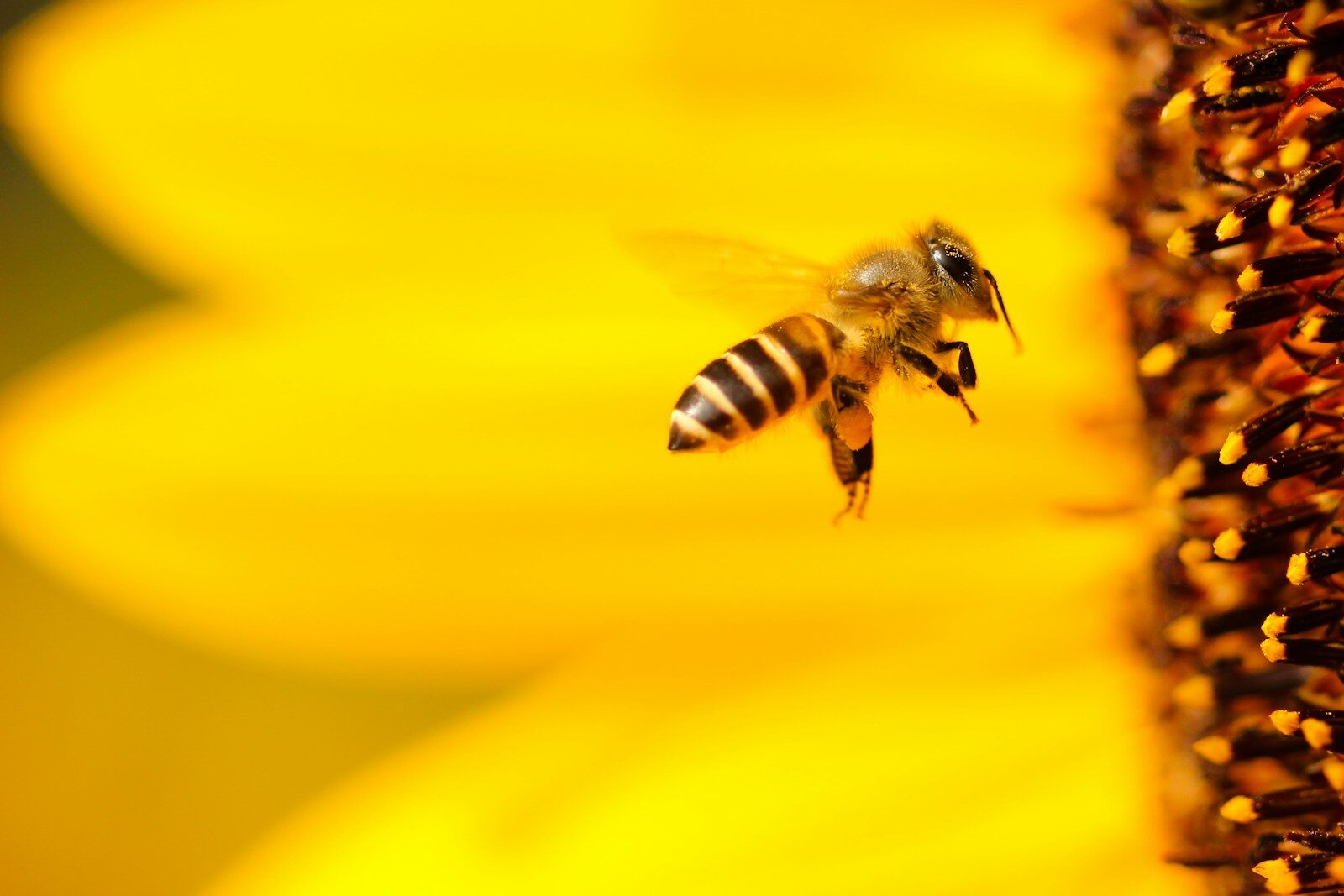
This sophisticated form of honeybee communication represents one of the most remarkable examples of symbolic language in the animal kingdom. Through the waggle dance, a single forager can recruit dozens of hivemates to fly directly to a food source they’ve never visited before. The precision of this system allows bees to share exact coordinates across distances of several kilometers, all performed in the darkness of the hive where visual cues are nearly impossible.
The discovery of how honey bees communicate through dance revolutionized our understanding of insect intelligence and social behavior. From the groundbreaking research that first decoded this language to modern studies revealing the chemical and sensory elements involved, the waggle dance continues to fascinate scientists and beekeepers alike with its complexity and effectiveness.
How Honeybees Use the Waggle Dance to Share Flower Locations
When a forager bee finds flowers rich in nectar or pollen, it returns to the hive and performs a waggle dance on the honeycomb surface to tell its nestmates exactly where to go. The dance encodes both the direction and distance to the food source through specific movements and angles.
The Figure-Eight Pattern and Waggle Run
The waggle dance follows a distinctive figure-eight pattern that other bees can observe and interpret. A forager bee runs straight while waggling its body from side to side, then circles back to the starting point by turning right. After another waggle run, it circles back by turning left, alternating between right and left turns throughout the performance.
The straight portion where the bee waggles is called the waggle run or waggle phase. During this phase, the bee releases specific chemical compounds onto its abdomen and into the air. Each complete circuit through the figure-eight can be repeated anywhere from one to over 100 times, depending on how excited the bee is about the location of the flowers it discovered.
Encoding Distance and Direction
The waggle dance encodes distance and direction through two key measurements. Dance duration tells other bees how far away the flowers are—the longer the waggle run lasts, the farther the target. A waggle run lasting just a second or two indicates nearby flowers, while longer runs signal more distant food sources.
Direction gets communicated through the angle of the waggle run. Flowers located directly toward the sun are shown by waggling straight up on the vertical comb. Any angle to the right or left of the sun gets coded by a corresponding angle to the right or left of the upward direction.
Cavity-nesting honeybees perform this dance communication in the darkness of their hive, using gravity as their reference point instead of visual cues. The bees adjust their dance angles over time to account for the sun’s movement across the sky, ensuring their directions stay accurate even after they’ve been inside for a while.
Why the Waggle Dance Matters for Bee Colonies
The waggle dance helps coordinate bee foraging across the entire colony. When multiple forager bees perform dances simultaneously, they’re essentially competing to convince their nestmates to follow their directions to what they believe is the best food source. More vigorous waggling indicates higher-quality flowers with abundant nectar.
This honeybee dance language becomes especially important in environments where flowers are scattered and hard to find. Without it, individual bees would waste significant energy searching randomly for food. The dance allows successful foragers to share their knowledge, making the whole colony more efficient at gathering resources.
Forager bees also use the waggle dance to communicate locations of water sources and potential new nest sites when a colony swarms. The precision of this system means bees can direct their nestmates to targets located hundreds of meters away from the hive with remarkable accuracy.
Decoding the Dance: Understanding Direction and Distance
The waggle dance encodes both direction and distance through distinct physical components that other bees can read like a map. The angle of the waggle run indicates where to fly relative to the sun, while the duration reveals how far to travel.
The Angle Relative to the Sun
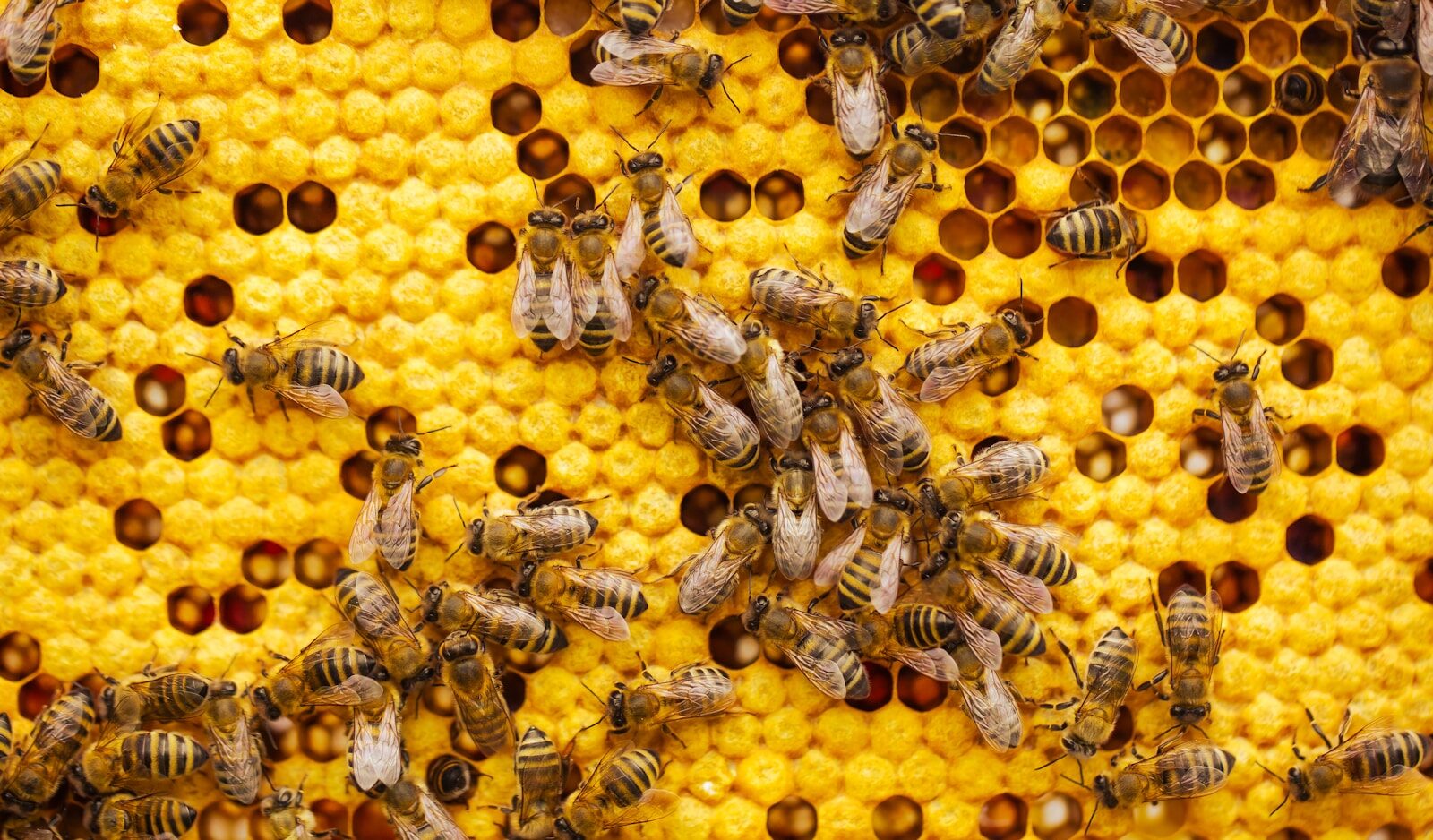
When a foraging bee performs the honey bee dance inside the dark hive, she uses the vertical surface of the honeycomb as a reference point. The angle of her waggle run relative to straight up corresponds directly to the angle between the sun and the food source outside.
If she waggles straight up, the flowers are in the direction of the sun. A waggle run 45 degrees to the right of vertical means other bees should fly 45 degrees to the right of the sun’s position. This system works even though the dancers can’t see the sun while inside the hive.
The dance communicates celestial cues through motion that translate the outdoor landscape into an indoor reference system. It’s essentially a compass that converts horizontal outdoor angles into vertical indoor ones.
The Role of Waggle Duration
The duration of the waggle phase directly correlates with distance to the nectar and pollen sources. Longer waggle runs indicate that foragers need to fly farther from the hive.
Bees measure distance through optic flow, which is the visual sensation of movement across their eyes as they fly. The more images that flow past their retinas during flight, the longer they waggle when they return home. A short waggle of about one second might indicate a food source 100 meters away, while a dance lasting several seconds could mean the flowers are over a kilometer distant.
Dance duration varies in a non-linear pattern as distances increase. The relationship between waggle time and actual distance isn’t perfectly proportional but still provides remarkably accurate information.
Interpreting the Message: From Hive to Flower
Following bees crowd around the dancer, touching her with their antennae and feeling the vibrations of her movements. They need to observe multiple dance cycles to extract the complete message about both angle and distance.
Research shows that correct waggle dancing requires social learning, meaning young bees must follow experienced dancers to develop proper interpretation skills. Without this learning opportunity, bee behavior becomes less precise in locating advertised resources.
Once a bee decodes the direction, distance, and quality information, she exits the hive and flies the indicated vector. The system allows colonies to efficiently deploy foragers to the most productive flower patches without wasting energy on random searches.
Types of Dance Communication in Honeybees
Honeybees employ different dance patterns depending on the proximity of resources, with the round dance signaling nearby locations and the waggle dance conveying distant ones. These bee communication methods also vary between species like Apis mellifera and Apis dorsata, each displaying unique dance dialects.
Round Dance vs. Waggle Dance
The round dance serves as the honeybee’s way of announcing food sources within close range of the hive. When a forager discovers flowers less than 50 meters away, she performs circular movements that lack directional information. This simpler form of dance communication tells nestmates that nectar or pollen is nearby without specifying exactly where to go.
The waggle dance encodes both distance and direction through a figure-eight pattern. A bee performing this honey bee dance wiggles her abdomen while moving in a straight line, then loops back in alternating directions. The angle of the waggle run relative to vertical indicates the direction toward the sun, while the duration of the waggle phase correlates with distance to the resource.
Transitional Behaviors
Between the round dance and full waggle dance, bees display intermediate movements when food sources fall in the 50 to 100 meter range. These transitional dances show abbreviated waggle runs or less pronounced figure-eight patterns. The behavior shifts gradually as foragers encounter resources at increasing distances from the colony.
Bees adjust their dance style based on what information nestmates actually need. A short waggle run might appear during what otherwise looks like a round dance, indicating the resource sits just beyond the immediate vicinity. This flexibility in the bee dance language allows colonies to efficiently allocate foragers across various distances.
Variations Across Honeybee Species
Different honeybee species have developed distinct dance communication dialects. Apis mellifera, the Western honeybee, performs its waggle dance on vertical comb inside dark hives. Apis dorsata, the giant honeybee, dances on the exposed surface of its single-comb nest, adapting the dance plane to horizontal surfaces.
Asian honeybees can understand European honeybee dances despite evolutionary separation, though each species calibrates distance differently. These variations reflect adaptations to different environments and foraging landscapes where each species evolved.
Karl von Frisch and the Discovery of the Dance Language
Austrian ethologist Karl von Frisch spent 27 years deciphering how honeybees communicate through dance, discovering that these movements encode precise information about flower locations. His work revealed the most sophisticated form of non-primate communication known to science.
Early Research and Experiments
Von Frisch began observing bee communication through body movements in 1919. He noticed that forager bees performed distinct dance patterns when they returned to the hive after finding food sources.
His experiments identified two main dance types. The round dance consisted of circular movements that indicated nearby food sources. The waggle dance was more complex, with the bee moving in a figure-eight pattern while waggling its abdomen.
Through careful observation, von Frisch determined that the waggle dance communicated both direction and distance. The angle of the waggle run relative to vertical indicated the direction of flowers relative to the sun. The duration of the waggle phase conveyed how far bees needed to fly.
Von Frisch published his findings in “Die Tänze der Bienen” in 1946, demonstrating that successful foragers perform stereotyped dances to share resource locations with nestmates.
Nobel Prize and Its Impact on Science
Von Frisch’s discovery of the waggle dance earned him the Nobel Prize in 1973. The award recognized his revelation that bees possess a sophisticated communication system with a specific, coded message displaced in both space and time from the dancer’s discovery.
His work fundamentally changed how scientists understood animal communication. The bee language demonstrated that insects could convey abstract information about locations they had visited, a cognitive ability previously thought limited to higher animals.
The Nobel Prize brought widespread attention to honeybee research and inspired generations of scientists to study insect behavior and communication systems.
Ongoing Debates in Bee Communication
Despite von Frisch’s recognition, skeptics questioned whether recruits actually used dance information to find food sources. Some researchers suggested bees relied primarily on odor cues rather than interpreting the dance.
Scientists Adrian Wenner and Patrick Wells published extensive critiques arguing that the dance language hypothesis lacked sufficient evidence. They proposed that recruits found food through scent trails and environmental cues instead.
The debate persisted until 2005, when researchers used harmonic radar to track recruited bees’ actual flight paths. The study provided quantitative proof that recruits translate dance codes into direct flights toward advertised food sources, vindicating von Frisch’s original conclusions.
Chemical and Sensory Elements of the Waggle Dance
The waggle dance involves more than just visual movements. Bees rely on chemical signals and physical vibrations to share complete information about flower locations with their hive mates.
Pheromone Signals and Scent Marks
Honeybee communication extends beyond choreography into the chemical realm. Waggle-dancing bees produce a unique scent that affects the behavior of other foragers watching the dance.
These pheromone signals help reinforce the message being conveyed through movement. Dancing bees carry floral scents on their bodies from the food source they visited, allowing other bees to identify the specific type of flowers they need to find.
Key pheromone functions include:
- Alarm pheromones – alert the colony to threats
- Queen pheromones – regulate colony organization
- Foraging pheromones – mark successful food locations
Research shows that at least 15 known types of pheromones regulate various aspects of bee behavior, from alarm responses to queen succession. The scent marks left by dancing bees provide crucial context that dance movements alone cannot convey.
The Role of Vibrations and Antennae
Physical contact plays a critical role in how bees receive waggle dance information. Follower bees use their antennae to detect vibrations produced during the waggle portion of the dance.
These vibrations travel through the comb surface and through the air as sound waves. Bees position their antennae close to the dancing bee to pick up these mechanical signals, which help confirm the distance and urgency of the food source.
The duration and intensity of vibrations correspond to food source quality. Stronger vibrations typically indicate higher-quality nectar or pollen deposits worth the energy expenditure to collect.
Environmental Factors Influencing Communication
External conditions directly impact how effectively bees can perform and interpret the waggle dance. Light levels inside the hive affect how clearly follower bees can observe the dance movements on the vertical comb surface.
Temperature influences bee activity levels and their ability to maintain precise dance patterns. Colder temperatures can slow down dancing bees and make their movements less distinct.
Hive congestion also matters. When too many bees crowd the dance floor area, it becomes harder for dancers to complete their patterns and for followers to observe accurately. Wind conditions outside the hive can affect how bees calculate and adjust the directional component of their dance relative to the sun’s position.
Social Learning, Collective Decision-Making, and Beekeeping Insights
The waggle dance isn’t just a solo performance—it’s part of a sophisticated system where bees learn from watching each other and colonies make decisions together. Recent research shows that dance communication shapes how thousands of individuals coordinate their foraging behavior, with surprising implications for how beekeepers manage their hives.
How Bees Learn and Decide Together
While scientists once thought the waggle dance was purely instinctual, social learning plays a crucial role in how bees tune their dance performance. Young bees watch experienced foragers and gradually improve their dancing accuracy over time.
The collective decision-making process works through simple rules that filter information across the colony. When a bee finds pollen or nectar, she performs more dance circuits for resources that offer higher net energy gains. Closer sites get advertised more enthusiastically than distant ones, assuming equal quality.
This creates a built-in preference system. More recruits get sent to the most profitable flowers automatically, without any individual bee needing to compare all available options. The colony essentially votes with dance enthusiasm, directing workforce to the best patches in the landscape.
Not all bees respond to dances equally, though. Foragers with current knowledge of good sites rarely switch based on dances for alternatives. But when a known patch depletes, those same bees become highly receptive to dance information from nestmates.
Implications for Swarming and Colony Organization
The dance communication system becomes especially critical during swarming, when a colony splits and scout bees must locate a new home. Scout bees perform waggle dances to advertise potential nest sites, with dance intensity reflecting site quality.
Multiple scouts may dance for different locations simultaneously, creating a competitive marketplace of options. The site that generates the most cumulative dancing eventually wins, and the swarm moves as a unified group. This prevents the colony from splitting further or choosing suboptimal locations.
The same communication architecture that guides daily foraging behavior thus enables one of the colony’s most important decisions. Individual scouts explore independently, but the final choice emerges from pooled information on the dance floor.
Applications in Modern Beekeeping
Understanding dance communication helps beekeepers interpret colony health and foraging conditions. The dances on a colony’s dance floor provide insight into what resources bees are finding and how far they’re traveling to get them.
When bees consistently dance for distant locations, it signals that nearby forage is scarce. Beekeepers can respond by moving hives closer to better flower patches or supplementing with feeding stations. Observing dance angles throughout the season also reveals which direction holds the most attractive resources.
Research shows that collective foraging patterns vary considerably across different landscapes. Colonies in complex urban environments rely more heavily on dance recruitment than those in agricultural areas, where resources may be more predictable. This variation suggests beekeepers should adjust management strategies based on local landscape characteristics rather than applying one-size-fits-all approaches.