A Group of Flamingos Is Called a Flamboyance and They Get Their Pink Color Entirely From the Shrimp and Algae They Eat in the Wild
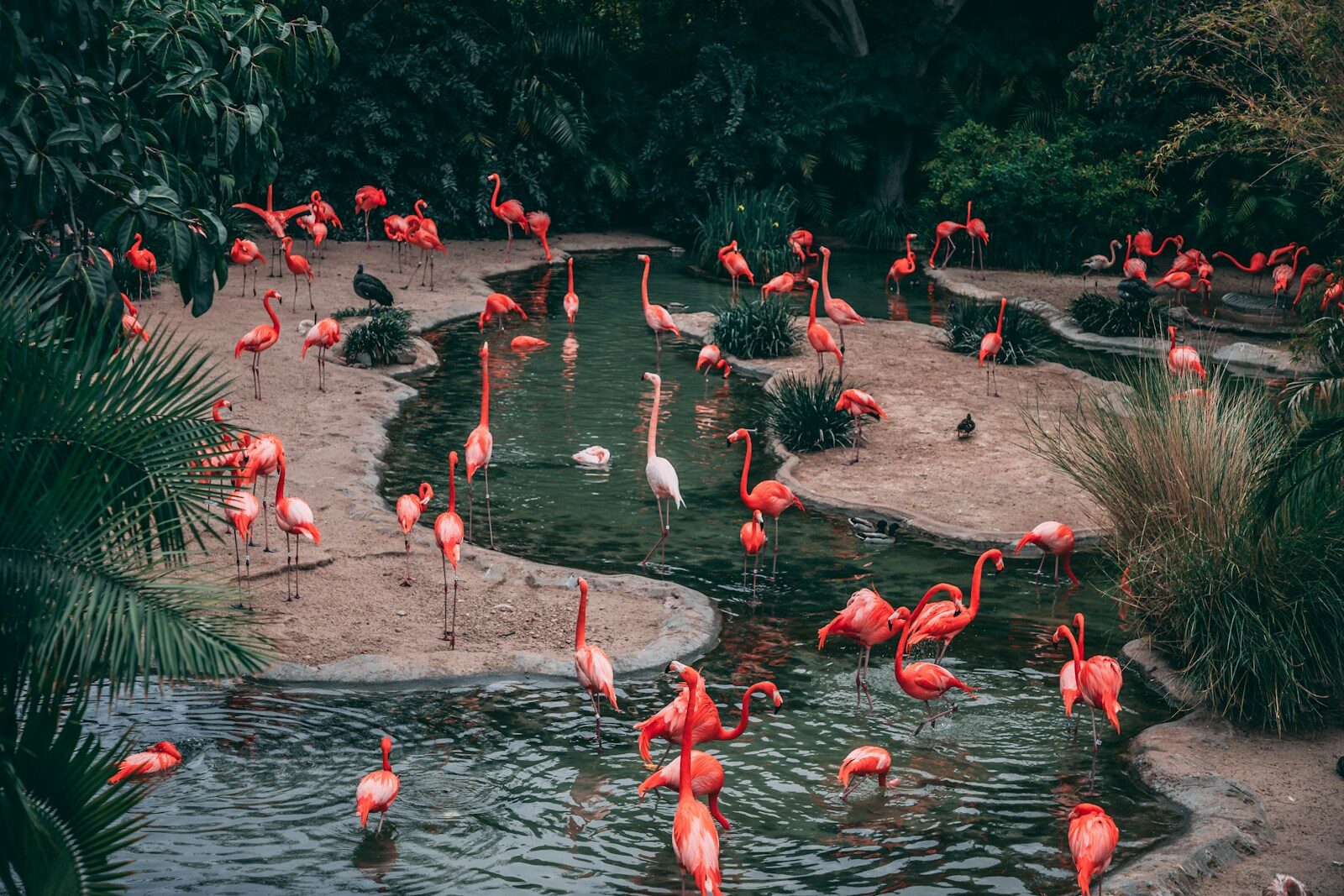
Flamingos stand out as one of nature’s most visually striking birds, and the language used to describe them is just as captivating as their appearance. A group of flamingos is called a flamboyance, a term that perfectly captures the showy, vibrant nature of these long-legged wading birds. The name fits remarkably well when considering that their famous pink coloration comes entirely from their diet of shrimp and algae in the wild.
These social birds gather in groups that can number in the thousands, creating spectacular displays of color across saltwater lagoons and coastal lakes. The term “flamboyance” derives from the French word flamboyant, meaning flaming or showy, which makes sense given that flamingos are named after flames due to their brilliant coloring. What many people don’t realize is that flamingo chicks actually hatch with grey feathers and only develop their signature pink hue over time.
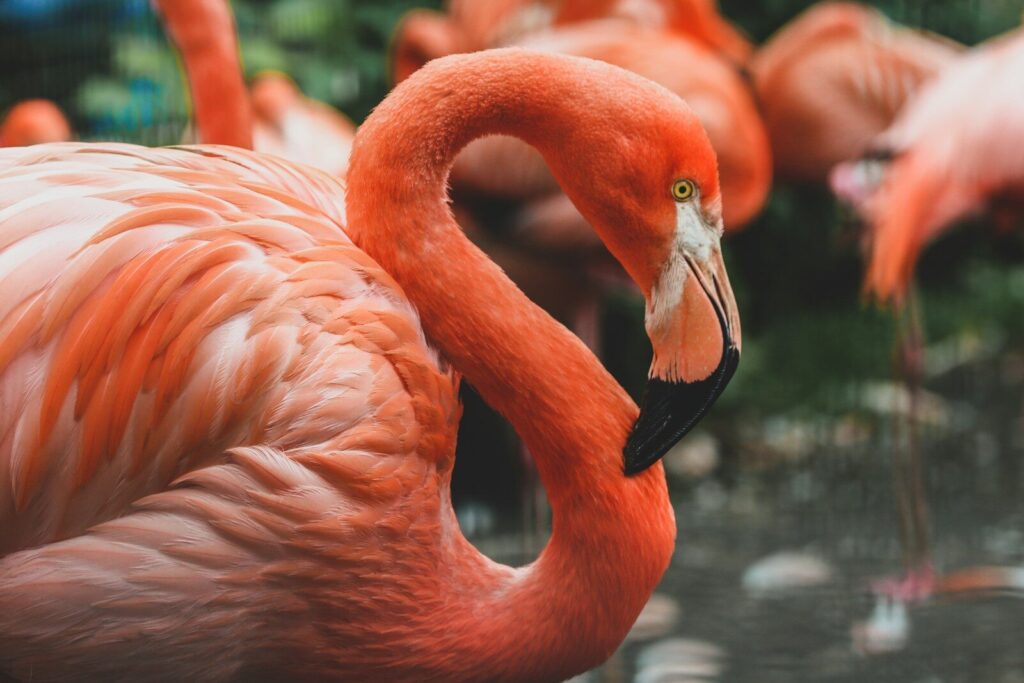
The pink coloration develops from carotenoid pigments found in the algae, brine shrimp, and other small crustaceans they consume. This dietary connection means that flamingos are literally what they eat, with brighter pink birds often having better access to food sources rich in these pigments. Beyond their color and collective noun, flamingos display fascinating behaviors that make their flamboyances even more remarkable.
The Meaning Behind ‘Flamboyance’
The term “flamboyance” comes from Old French roots and perfectly captures the vibrant, showy nature of these pink birds when they gather together.
Origins of the Term
The word flamboyance comes from the French word “flamboyant,” which means flaming or showy. This makes the connection between flamingos and their collective noun almost too perfect, since flamingos themselves are named after flames—specifically from the Latin word flamma—due to their bright coloring.
Collective nouns like these are also known as terms of venery, traditional phrases used to describe groups of specific animals. While some people might wonder what is a group of flamingos called, the answer is far more colorful than a simple “flock.”
The official term captures something special about these birds that generic group names just can’t match.
Flamboyant Connections to Flamingos
A flamboyance of flamingos reflects both their visual impact and their social behavior. When these birds gather in large numbers, they create a dazzling display of pink and red hues that transforms any landscape into something spectacular.
The term fits because flamingos are inherently showy creatures. They stand on one leg, curve their necks gracefully, and display vibrant pink plumage that ranges from pale pink to deep scarlet depending on their diet. Their synchronized movements and social interactions add to the spectacle.
Few collective nouns capture an animal’s essence as perfectly as this one does. The energetic, eye-catching nature of a group of flamingos called a flamboyance makes the term both accurate and memorable.
Collective Nouns and Animal Groups
Animal group names range from straightforward descriptions to whimsical terms that capture the essence of different species. These linguistic quirks stem from medieval hunting traditions and have evolved into a playful aspect of modern language.
Famous Examples in Nature
A murder of crows stands as one of the most recognizable collective nouns in the animal kingdom. The dark, ominous term likely originated from the birds’ association with death and battlefields in folklore.
A parliament of owls reflects the bird’s reputation for wisdom. The term conjures images of these nocturnal creatures gathering for serious deliberations.
Beyond birds, other animals have equally distinctive group names:
- Lions: A pride
- Wolves: A pack
- Fish: A school
- Whales: A pod
Each term captures something essential about the species’ behavior or cultural perception.
Role in Language and Culture
Many collective nouns trace back to terms of venery, medieval hunting terminology used by nobility. The Book of Saint Albans, published in 1486, codified numerous animal group names that hunters and aristocrats used during their pursuits.
These archaic terms have persisted because they add color and personality to language. Writers and speakers use them to make descriptions more vivid and memorable. A flamboyance of flamingos sounds far more evocative than simply saying “a group of flamingos.”
Modern culture has embraced these quirky terms beyond their original hunting context. They appear in literature, casual conversation, and educational materials as a way to celebrate both language and the natural world.
Why Flamingos Live in Groups
Flamingos gather in massive colonies that can number in the thousands, driven by survival needs and social behaviors. These groups provide critical advantages for avoiding predators, finding food more efficiently, and raising their young successfully.
Protection Against Predators
Living in large groups offers flamingos a significant safety advantage against predators. When thousands of birds cluster together, it becomes much harder for predators to single out individual targets.
The sheer number of eyes watching for danger means threats get spotted faster. A group of flamingos called a flamboyance acts as an early warning system where any bird can alert the entire colony.
Predators like eagles, foxes, and wild cats often hunt flamingos, especially targeting vulnerable chicks. By staying in dense groups, adult flamingos create a protective barrier around their young. The confusion created by hundreds of pink bodies moving together makes it difficult for predators to coordinate an attack.
Benefits for Feeding
A flamingo group works together to maximize food intake in their feeding grounds. Flamingos feed by stirring up sediment with their feet, which kicks up the shrimp, algae, and small organisms they eat.
When many birds stomp and stir simultaneously, they create a much more productive feeding environment. The collective action generates stronger currents and vortexes that bring more food particles into suspension. This group feeding behavior allows each bird to catch more food with less individual effort.
Colonies also help flamingos locate the best feeding spots. When one bird finds a productive area rich in brine shrimp or algae, others quickly follow. This communal knowledge ensures flamingos in the wild can exploit food resources more effectively than solitary birds could.
Breeding and Social Life
Flamboyance of flamingos colonies are essential for successful breeding. These birds need the social stimulation of large groups to trigger their breeding cycle through synchronized displays.
Before breeding, colonies split into smaller groups of 15 to 50 birds that perform ritual displays together. They stretch their necks upward, call loudly, and flap their wings in coordinated movements. These displays don’t target specific individuals but occur randomly throughout the group, helping unpaired birds find mates.
Key breeding benefits include:
- Synchronized nesting increases chick survival rates
- Strong pair bonds form more easily with more mate options available
- Collective parenting provides better protection for vulnerable young
- Scarce nesting sites get used more efficiently when birds cluster together
Flamingos are highly social creatures that maintain these bonds year-round, not just during breeding season.
Flamingo Species and Habitat
Six distinct flamingo species inhabit regions across Africa, Europe, Asia, and the Americas, with the greater flamingo being the most widespread and the lesser flamingo the most numerous. These birds thrive in large colonies near shallow lakes and coastal lagoons where their preferred food sources are abundant.
Greater, Lesser, and Chilean Flamingos
The greater flamingo stands as the tallest species at 3.9 to 4.7 feet and claims the title of most widespread, living across parts of Africa, southern Europe, and southern and southwestern Asia. This impressive bird can weigh up to 7.7 pounds and displays the classic pink plumage people associate with flamingos.
The lesser flamingo represents the smallest species at just 2.6 feet tall and 5.5 pounds, but it’s also the most numerous of all flamingo species. These birds primarily inhabit Africa, particularly around the Great Rift Valley, and extend to northwestern India where they gather in massive numbers.
Chilean flamingos make their home in temperate South America, distinguishing themselves from their tropical relatives. They share their range with two other South American species: the Andean flamingo and James’s flamingo, both of which live in the high Andes mountains of Peru, Chile, Bolivia, and Argentina at extreme altitudes.
Massive Colonies in the Wild
Flamingos in the wild are extremely social creatures that form colonies numbering in the thousands. These gatherings serve three critical purposes: protection from predators, maximizing food intake, and efficient use of limited nesting sites.
The birds prefer shallow bodies of water including lakes, lagoons, and coastal areas where they can wade and filter-feed. Their specialized bills work upside-down to separate mud and silt from the brine shrimp, algae, and small invertebrates they consume.
Key habitat requirements include:
- Shallow water bodies for feeding
- Mudflats for nesting
- High concentrations of algae and small crustaceans
- Minimal human disturbance
Before breeding season, these large colonies split into smaller breeding groups of approximately 15 to 50 birds. The synchronized displays and calls that follow help birds without mates find partners while strengthening existing pair bonds.
The Science of Flamingo Coloration
Flamingos transform from gray hatchlings into vibrant pink birds through a fascinating biological process that depends entirely on their diet. The carotenoid-rich foods they consume undergo chemical changes in their bodies that ultimately create their signature coloration.
How Diet Influences Feather Color
Flamingos are born with dull gray feathers and only develop their iconic pink hue through what they eat. The phrase “you are what you eat” is especially accurate for flamingos and their pink coloration, since their vibrant appearance comes directly from their food sources.
These birds consume a specialized diet in their wetland habitats. Flamingos feast on algae, brine shrimp, and brine fly larvae, which contain high concentrations of color-producing compounds. The foods flamingos eat would actually be toxic to many other animals, but these birds have adapted to thrive on this unique diet.
The intensity of a flamingo’s color varies based on what’s available in their environment. Some flamingos appear bright pink, while others show orange or red tones depending on their habitat and seasonal food sources. Birds with limited access to carotenoid-rich foods may appear pale or even white.
The Role of Carotenoid Pigments
Carotenoids are natural pigments found in many plants and organisms that produce red, yellow, and orange colors. These are the same compounds that give carrots their orange color and make tomatoes turn red when ripe.
When flamingos consume their prey, enzymes in their digestive system break down the carotenoids into smaller pigment molecules. The pigments are absorbed by fats in the liver and then deposited into growing feathers and skin cells. This process requires flamingos to eat large quantities of carotenoid-rich foods to achieve their characteristic coloration.
The microscopic algae that brine shrimp consume contain these carotenoids, which then accumulate in the shrimp themselves. When flamingos eat the shrimp, they’re getting a concentrated dose of these color-producing pigments. This creates a direct link between the wetland ecosystem and the birds’ appearance.
Fascinating Flamboyance Behaviors
When flamingos gather in their flamboyances, they engage in remarkable synchronized displays and maintain complex social structures through constant communication. These behaviors strengthen their colonies and help them thrive in some of the world’s harshest wetland environments.
Synchronized Dancing
A flamboyance of flamingos performs coordinated ritual displays that look like carefully choreographed dances. Before breeding season, colonies split into smaller groups of about 15 to 50 birds that perform these synchronized movements together.
The displays involve several distinct movements. Flamingos stretch their necks upward, make loud calls while moving their heads from side to side, and flap their wings in unison. These performances aren’t directed at specific individuals but happen randomly throughout the group.
The synchronized dancing serves important purposes for the flamboyance. It stimulates simultaneous nesting across the colony and helps unpaired birds find mates. The displays also reinforce social bonds within the group of flamingos, creating a stronger, more cohesive community that benefits everyone in the colony.
Social Bonds and Communication
Flamingos are extremely vocal birds that rely on constant communication to maintain their large colonies. Their vocalizations range from grunting and growling sounds to distinctive nasal honking that can be heard across wetlands.
These calls serve multiple critical functions within a flamboyance. Parents and chicks use specific vocalizations to recognize each other in crowded colonies numbering in the thousands. The birds also use calls to coordinate their ritualized displays and keep massive flocks organized during feeding and migration.
Flamingos form strong pair bonds despite living in huge colonies. While pairs typically stay together, flamingos in larger flamboyances sometimes switch mates when more options become available. The constant chatter and interaction within these social groups creates a noisy but highly organized community structure.